Tuesday, April 18, 2017

Race Report: 2017 Boston Marathon


On April 17th, I ran the Boston Marathon.  This was my sixth consecutive Boston Marathon and my seventh overall.  I’m not sure how long I can keep my current streak going.  Qualifying is getting more and more difficult.  I’ve yet to qualify for 2018.

For years, I stayed in hotels that were within walking distance of the finish line.  Now the room rates are too expensive.  They seemed to take a big jump two years ago.  This year, I stayed in Cambridge, near Lechmere Station, which is the northern terminus of the Green Line.  The expo, the loading point for buses to the start, and the finish line are all near Green Line stations, so it wasn’t too hard to get around, even though I was outside Boston.

Boston is one of those cities where you should never rent a car.  Driving is a hassle, and parking is expensive.  It’s much easier to get around taking the subway and doing a little bit of walking.  I always buy a seven day pass, even though I’m only in town for four days.  I’ve never failed to use the trains enough to get my money’s worth.

I flew to Boston on Saturday afternoon and got to my hotel around 4:30.  After checking in and dropping off my bags, I went to JJ Foley’s Café to catch the tail end of a happy hour meetup with members of a group called Boston Squeakers for Life.

A “squeaker” is someone who has qualified for Boston, but doesn’t know if their qualifying time will actually be good enough to get into the race.  In recent years, the number of qualified runners who have tried to register has exceeded the number of available slots.  When this happens, some of the “squeakers” don’t get in.  Last year, the cutoff was about two and a half minutes.

I joined this group last summer when I didn’t know if I would even be able to qualify.  I ended up qualifying with 3:21 to spare.  That turned out to be good enough.  I used to be able to qualify with at least 20 minutes to spare.  Those days are gone.  Now I’m a squeaker.

By the time I got to the café, some of the runners were already leaving, but I joined several others for dinner.

Sunday morning, I went to the expo at the Hynes Convention Center.  On my way, I stopped by the finish line to take a picture.  All weekend, one block of Boylston Street is blocked off to traffic so they can set up the finish line scaffolding.


Near the finish line, there were memorials for the victims of the 2013 bombings and the police officer who died during the ensuing manhunt.


After picking up my race packet, I took the time to browse some of the booths.  I don’t usually do much shopping at expos, but I always bump into people I know while browsing the booths.  This year was no exception.

After the expo, I took the time to return to my hotel before going to lunch.  The race packet is bulky, and I don’t like carrying it around all day.  I also didn’t want to risk anything happening to my race bib.

Boston weekend isn’t just about the race.  It’s also a chance to get together with friends.  The rest of the day included meetups with two different running clubs.  At noon, I went to the finish line for the Marathon Maniacs group photo.  I’m not actually that much into group photos, but a lot of my friends are in this club, so it’s like one stop shopping to see friends in Boston.  After the photo, I joined a few friends for lunch at Durgin Park.  This is my favorite Boston restaurant.  I go there every time I’m here.  I don’t always order the same entree, but I always have Indian pudding for dessert.


In the afternoon, I went to Solas Irish Pub to meet with other members of the 50sub4 Club.  Last year, despite being a 50sub4 finisher, I didn’t feel like I really belonged.  At the time, I couldn’t even break five hours.  Now, having broken four in my last three races, I felt more comfortable wearing my 50sub4 visor.

Later, I had dinner at Babbo Pizzeria with some friends from California whom I first met in Paris.  The last time we had dinner together we were in South Africa for the Comrades Marathon.  It’s a small world.

The logistics of getting everyone to the start in Hopkinton is a big deal.  Hundreds of buses begin loading at Boston Common as early as 6:00, even though the first wave doesn’t start running until 10:00.  This year, I was in the third wave.  That meant I didn’t need to get up as early.  Runners in the third wave were expected to board buses between 8:00 and 8:40.  I was able to get a little extra sleep.  I also had time to eat breakfast at the hotel.

We boarded the buses along a different street this year, but it’s wasn’t far from the old location.  By moving the bus location, they were able to have two rows of buses side by side.  That really sped up the loading process.  In past years, I’ve waited in line for 30 minutes to board a bus.  This year, I walked right onto a bus with no waiting.

I was on a bus by 8:15 and got to the Athletes’ Village in Hopkinton at 9:20.  My wave wasn’t scheduled to start until 10:50, so I still had to wait in the Athletes’ Village for until we were instructed to walk to the start corrals.


When I was fast enough to start with the first wave, I would arrive at the Athletes’ Village before it got too crowded.  In rainy years, I could find a spot under one of the canopies.  This year, the village was already packed.  All the runners from the first two waves were already there, but it wasn’t quite time for them to make their way to the start.  It was harder to find an unclaimed patch of grass to sit on.  Also, the port-o-potty lines were already long.


As soon I got there, I got into a port-o-potty line.  The line was long and didn’t move very fast.  When I got in line, runners in wave one were heading to the start corrals.  While I waited in line, they called for runners in the first two corrals of wave two.  Then they called corrals three and four … then five and six … then seven and eight … then the first two corrals of wave three.  By the time I got through the line, it was already time for runners in my corral to leave.

You used to be able to bring whatever you wanted to the Athletes’ Village and then check a gear bag before walking to the starting line.  That ended after the bombs in 2013.  If you want warm clothes at the finish line, you can check a gear bag, but you have to drop it off in Boston Common, before boarding a bus to the start.  If you want an extra layer of clothes in Hopkinton, you need to bring clothes that you’re willing to donate.

You spend a long time at Boston Common, on the bus, and in the athlete’s village in Hopkinton.  I wore a cheap pair of sweatpants and the disposable jacket I got at the Cowtown Marathon.  It was warm enough that I really didn’t need them.   As I left the village to walk to the start, I dropped them in the donation bags.

On our way to the corrals, we passed a booth that had large dispensers of sunblock.  I applied sunblock before leaving the hotel, but a lot of runners stopped here. It was a bright sunny day.


It was a hot day for running a marathon.  By the time my wave started, it was already in the low 70s, and it would warm up a few more degrees during the race.  We also had a strong wind out of the west.  On the plus side, that meant we would be running with a tailwind.  Unfortunately, that also meant the wind wouldn’t cool us off as much as if it was coming from another direction.

Because of my recent back injury, I went into this race with low expectations.  I’ve lost a lot of training time, and I’m still not fully recovered.  My longest run since hurting my back was only seven miles, and that was at a cautious pace.  I didn’t expect to have back discomfort during the race, but I also didn’t want to push my luck.  I viewed this race as one to enjoy the experience.  I wasn’t gunning for a fast time, but I also wasn’t worried about finishing within the cutoff time.  If I felt good, I might try to break four hours, but qualifying for next year would have to wait until another race.

A lot changed after 2013.  The most obvious change was not being able to check gear bags in Hopkinton.  There were also subtle changes.  You might not notice if you weren’t looking, but there were soldiers on a rooftop overlooking the start corrals.


It’s easy to say you’re going to start at an easy pace.  It’s harder to actually do it when all of the runners in your corrals had qualifying times that are faster than you can currently run.  It’s even harder when the early miles are downhill and you have a tailwind.

I ran the first mile in 8:31.  It seemed easy enough, but I knew it was too fast.  My second mile was 8:15.  I knew that was much too fast.  I would be happy to average nine minutes per mile for the race.  That would bring me in under four hours.

While the pace seemed fast, I didn’t have any issues with my back.  It never bothered me during the race, and I quickly put it out of my mind.

Although the first two miles are mostly downhill, there are a couple places where the road briefly turns uphill.  Each time, I felt myself beginning to sweat.

After two miles, we reached an aid station.  I was so thirsty my throat felt bone dry.  I drank both water and Gatorade.  After that, there were aid stations every mile.  I drank more than one cup at several of them, but I always felt thirsty.  It was that kind of day.

I ran the next two miles in 8:28 and 8:21.  I knew that was too fast, so I forced myself to slow down a little.  I have a tendency to stay with the runners around me, but they were too fast.  I started to let them go and drift backwards through the field.  After that, my mile times ranged between 8:30 and 9:00.

At seven miles, I took a drink of water and accidentally splashed some of it on my face.  As the water dripped into my mouth, it tasted salty.  Yeah, I was sweating.

I’m sure the tailwind was pushing me to a faster pace, but it wasn’t doing much to help with the heat.  You just don’t get much cooling effect from a tailwind.  Occasionally, a strong gust would cool me off, but it never lasted long enough.

By the time I reached 10 miles, I was starting to feel tired.  I never felt like I was working hard, but the pace was fast enough to make me overheat.  That, in turn, made me feel fatigued.

Two miles later, I got a psychological lift, when I ran through the Wellesley “scream tunnel.”  After another mile, I got another psychological lift, when I reached the halfway point.

My half marathon split was 1:52.  That put me on pace for a 3:44 finish.  That’s when I knew for sure I was running too fast.  I’m not currently in shape to run 3:44 on a nice cool day.  I certainly shouldn’t have been trying to do it on a hot day.

The next three miles were all downhill, so I enjoyed it while I could.  Just before 16 miles, I crossed the Charles River and entered Newton.  The easy part of the race was over.

There are four hills in Newton.  None of them are huge, but they come at a difficult time.  If you’ve been running too fast, this is where you usually pay for it.

The first hill is the most gradual.  My concern here was that if I worked too hard on the hills, I might overheat.  At first, I let myself fall behind the other runners.  Then I saw a spectator with ice.  I put some ice cubes in my hat.  That gave me confidence that I wouldn’t overheat on the first hill.  I didn’t intend to pick up my effort, but suddenly I was keeping pace with the other runners.  Then I started to pass them.  Then I backed off.

Between the hills, the road turns downhill again.  I used these sections between the hills as opportunities to recover and regain my composure.

This course has only four sharp turns.  The first one comes between 17 and 18 miles.  As soon as you make the right turn onto Commonwealth Avenue, you begin the second hill.  This one is the steepest of the four.  Here I just wanted to keep running the whole way. I didn’t care if I slowed down, but I didn’t want the hill to break me.  For the first time in the race, I was breathing hard.

Because it’s one of the World Marathon Majors, the Boston Marathon has a large international component.  This year, there were runners from 99 different countries.  In Newton I saw a runner with a flag on the back of her shirt.  I’m familiar with a lot of flags, but I had never seen this one before.  I got closer, so I could read the writing underneath the flag.  She was from St. Lucia, an island in the Lesser Antilles.

At the 18 mile clock, I saw my friends Alison and Elizabeth, who were volunteering.  That gave me a lift. At the 30K clock, I saw my friend David, who always comes down from Maine to volunteer.  If any of you are reading this, thank you for volunteering.

At 19 miles, I checked my watch.  At this point I just wanted to hang on well enough to break four hours.  With 7.2 miles to go, an average of 10 minutes per mile would be good enough. I even had a few minutes to spare.

The third hill is the smallest of the four, but I still found it to be tiring.  About halfway up this hill, another runner asked me if this was Heartbreak Hill.  I said, “No.  That’s the next one.”  Her friend made a sound that was somewhere between a laugh and a sigh.

The fourth hill is “Heartbreak Hill.”  It starts out gradual, but gets steeper.  About halfway up this hill, I saw a spectator holding a small cup and yelling, “ice cold beer.”  I told myself before the race I wouldn’t do any beer stops today.  Halfway up a hill on a hot day was a bad place to have a beer.  I reached for it anyway.  That got a big cheer from the crowd, which was the whole point.  I took it on the run, so about half of it spilled on my hand.  I only got a small taste.  That’s just as well.

I struggled with the rest of the hill, but it didn’t break me.  Then I regained my composure on the ensuing downhill.

I saw a spectator with a sign that may be my all-time favorite.  It read, “High five if you’re just doing this for the pizza.”  I gave her a high five.  It’s like she knows me.

At 21 miles, I passed Boston College and drank some Gatorade at an aid station.  For several miles, the water and Gatorade at the aid stations seemed lukewarm after sitting in the sun.  Here, they ran out of luke.  It was just plain warm.

After Boston College, the road turns sharply downhill.  I was able to pick up the pace.  The last five miles have a downhill trend.  You can make good time here if you’re feeling good.  I wasn’t feeling good, but could still push myself.  The Newton hills didn’t break me.

In the late miles, the wind picked up.  Those occasional strong gusts became more frequent.  As a result, I didn’t feel as hot.  It’s also possible the temperature was beginning to drop.  I was no longer in danger of overheating.

With 4.2 miles to go, I realized I could break four hours just by averaging 11 minutes per mile.  I wasn’t slowing down, so I knew I had it.

I saw some spectators offering cups of water.  It had been a while since the last aid station, and I was getting thirsty, so I grabbed a cup.  It was nice and cold.  After another block, I reached an aid station.  Having just had cold water, I skipped the warm stuff.

Somewhere between 23 and 24, I saw the iconic Citgo sign.  When you reach it, you have one mile to go.  My goal now was to get to that sign.  Just before getting there, I had to run up a small hill to cross a bridge.  I focused on getting to the “One mile to go” point.

The last mile was tough. I just needed to keep running, but it was getting tougher. 
I had run out of downhill.

In the last half mile, you make the two most famous turns on road racing:  right on Hereford and left on Boylston.  Hereford is slightly uphill, but it’s not enough to break you unless you’re already broken.  I wasn’t broken.

When I made the final turn onto Boylston, I was conflicted.  On one hand, I wanted to pick my effort and finish as strong as I could.  On the other hand, I knew I could afford to just coast in.  I did neither.  I maintained the same effort, finishing in 3:51:29.

My average pace in the first half was 8:33.  My average pace in the second half was 9:07.  I slowed down, but I would have been happy if my average pace for the whole race was 9:07.  I held up much better than I expected.

The finisher medal for Boston always has the same basic design.  They make small changes in styling, but it always features the unicorn logo of the Boston Athletic Association.  I wouldn’t have it any other way.  This is always my favorite medal.  I bagged my seventh unicorn.


At any race, they always hand you a water bottle when you finish.  I usually decline, knowing there are better beverages as you move farther through the finisher chute.  This time I took the water and immediately started drinking.  Later, after getting a bag filled with snacks, I saw bottles of Muscle Milk.  I didn’t think I would have room for that much liquid, but I took one so I could get some protein.  I finished it before I reached the train.

At 6:30, they had a post-race party at Fenway Park.  It was free for runners, but $25 for friends and family.  I’m not sure why they think it’s worth $25.  Basically all you’re getting is admission to the stadium.  It doesn’t include any food or beverages.  If you want to eat, you need to buy overpriced stadium food.  You get a chance to see the ballpark, but you couldn't go into the bleachers until 8:00.

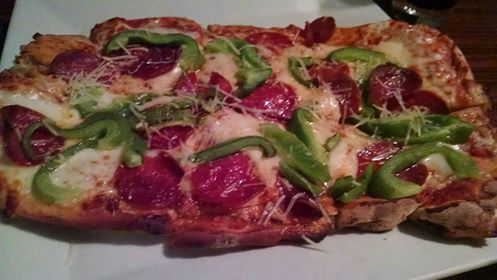
I wasn’t impressed, so I went across the street to have my post-race pizza at Boston Beer Works.  I didn't just run for the unicorn.  I also ran for the pizza.


Race Statistics
Distance:  26.2 miles
Time:  3:51:29
Average Pace:  8:50
Lifetime Marathons/Ultras:  332
Unicorns:  7

Friday, April 7, 2017

Out of the frying pan. Into the Fire.


In the two weeks leading up to the Circular Logic Marathon, I did very little running.  I had an area of inflammation in my left leg, and I wanted to give it a chance to heal.  After that race, I felt much better than I did two weeks earlier, but I still wasn’t 100 percent.  That left me wondering how much more I should rest before ramping up my training again.

As it turns out, my left leg is now the least of my problems.  It’s getting all the rest it needs.

Sunday was a rest day.  On Monday, I did a short bike workout in the morning and weight training in the afternoon.  I decided to wait until Tuesday to see how running felt.

My weight training started with two sets of high lat station pulldowns (similar to pull-ups) and two sets of bench press.  Then I did my first of two sets of curls.  Between sets, I set the curl bar on the same supports I use to hold the barbell when I’m doing my bench press.  It’s at an awkward height.  To pick it up with the right grip, I need to bend down a little.  When I picked up the bar again, I immediately felt a sharp pain in my lower back.

I didn’t know how bad it was, but I knew it wasn’t good.  I immediately set the bar back on the supports.  I never did my second set of curls.  My workout was over.

I knew I did something to my lower back, but I didn’t know for sure if it was a spinal injury, such as a slipped disk, or if I pulled a muscle in my lower back.  I was hoping it was just a pulled muscle.

For the rest of the day Monday and all day Tuesday, I mostly rested.  I took ibuprofen to manage the pain.  On the optimistic assumption that it was a muscular issue, I started icing my lower back.

On Wednesday, I saw my doctor.  After an exam, he couldn’t rule out the possibility of a disk injury, so he ordered an MRI.  In the meantime, he prescribed an anti-inflammatory and recommended applying ice and heat frequently.  He also told me to wait a few days before trying to run.  Without knowing the result of the MRI, he told me that I could probably recover in a couple weeks.  He cautioned, however, that if it was a disk impinging on a nerve, I probably wouldn’t be able to run the Boston Marathon.

There was one amusing moment during the exam.  When my doctor asked me to rate the pain on a scale of one to ten, I said, “Depending on what I’m doing, anywhere from one to four.”  He replied, “This coming from a marathon runner.”  I think he was implying that my “four” might be someone else’s “seven” or “eight.”

I was able to get an MRI scheduled that same day.  Within a few hours my doctor had the results.  He described it as a “Disc protrusion with impingement on a nerve root” and referred me to Tria Orthopedic Center for treatment.  Tria is where I had my physical therapy last year.  I don’t have a copy of the MRI images, but here’s a textbook diagram that’s similar.


The earliest I could get an appointment was today.  In the meantime, I didn’t do any running.  To keep from losing too much conditioning, I did a few short workouts on the stationary bike and some walking on the treadmill.

I had my consultation with the orthopedist this morning.  In general, she was upbeat.  Other than this disk protrusion, I have a surprisingly healthy spine for someone my age.  When I mentioned running the Boston Marathon in 10 days, she didn’t see any problem with that.  She said 10 days is plenty of time.  I can do a lot of healing before the race.

I went straight from my consultation to my first physical therapy appointment.  My therapist gave me four exercises to do twice a day.  She was also upbeat about how much I can improve before Boston.

She asked me if I was tapering for Boston.  I started to explain how I train through most races and wouldn’t actually taper until June, when I’m doing a 100 mile trail run.  At this point, I expected to get a funny look, even from another runner.  She said her husband was an ultrarunner, so she understood about training through races.  Then she asked me which 100 I was doing.  I love having doctors and therapists who understand me.

The doctor cleared me to begin running today, but my therapist suggested starting out with four minutes of walking for every minute of running.  I did my first run/walk workout today, and I felt fine.  Between now and Boston, I’ll run every other day.  I’ll gradually increase the proportion of running.  I'm now confident I can still do the race, but I'll probably have to adjust my goals.

Saturday, April 1, 2017

Race Report: 2017 Circular Logic Marathon


This morning, I ran the Circular Logic Marathon in West Lafayette, Indiana.  The course for this race was a paved one mile loop through Cumberland Park.  We ran this loop 26 times, with an extra out-and-back in the first lap to make the distance right for a marathon.

The course is flat, and it’s certified.  When I registered, I thought this would be a good place to make my first serious attempt at qualifying for the 2018 Boston marathon.  I don’t have a qualifying time yet.


I thought I would be in better shape by now.  Since then, I’ve put speed work on the back burner to focus on mileage and endurance.  My fastest recent race was the Cowtown Marathon, which I ran in 3:49:33.  To qualify for Boston, I needed to be 10 minutes faster.  I knew that would be a real stretch

In recent weeks, I’ve started to notice soreness where the back of my left leg meets my butt.  I only noticed it when I ran, but I started to notice it every time I started running.  I was worried it might be the tendon, so I took no chances.  In the last two weeks, I’ve done very little running.  When I did run, it was always at a slow pace.  If the soreness didn’t go away after a mile, I would stop.  As result, I averaged only a mile a day in the last 13 days before the race.  I did so little training that I gained three pounds and went into this race feeling well-rested, but not at all confident that I could run fast.  I also didn’t know how my left leg would hold up.  As recently as Wednesday, I still noticed some soreness after a short run.

I flew to Indianapolis Friday afternoon.  From there, I had to drive a little over an hour to get to my hotel in Lafayette.  After checking in, I continued to Fleet Feet Sports in West Lafayette to pick up my race packet.

This race has a small ecological footprint.  My race packet consisted of two race bib and safety pins.  That’s it.  There weren’t any ads, coupons, or product samples. There wasn’t even a bag.

They had race T-shirts, but they were optional.  You could pay an additional fee during registration to get a shirt.  I have more T-shirts than I really need, so I opted not to get a shirt.  I like it when races make the shirt optional.

We had two race bibs, so we could wear one in front and one in back.  The one in front had our numbers and timing chips.  The one on the back had our names.  This is a common practice for races that are multiple laps.  It makes it easier for runners to encourage each other.  After a few laps, runners going different speeds are constantly passing each other.

I had dinner at Spageddies Italian Kitchen.  They’re a family-oriented pasta restaurant, but I discovered they also have brick oven pizza.


For the last few nights, I had trouble sleeping.  Friday night was no exception.  I was worried about how my left leg would hold up running a marathon.

There were three different start times.  I opted for the regular start, which was at 9:00, but early starters were already running.  The temperature was still in the upper 30s, and there was a little bit of wind.  A lot of my friends love cooler temperatures for running, but I worry about my muscles tightening up when my legs are too cold.  I wore my cheetah tights and took the risk that I might be too warm later in the race, when it warmed into the upper 40s.  I also wore my cheetah arm warmers and hat.

I was wearing my Cheetah Man ensemble, but that wasn’t the best outfit.  There was another runner dressed as a zombie, complete with exposed brains and blood stains on his race bib.  He was going for a world record for the fastest marathon by a zombie.

In addition to port-o-potties, there was a building next to the course with real bathrooms.  Unfortunately, it wasn’t heated.  Sitting on the cold toilet seat didn’t do my left leg any good.

This is a cupless race.  Everyone provides their own water bottles, which are kept on tables in the start/finish areas.  You label the bottles with your bib number and indicate whether they should be filled with water or Gatorade.  You can also fill them with another beverage, if that’s your preference.

As you finish a lap, you grab a bottle and take it with you while you drink.  Then you close the bottle and toss it in a basket.  Volunteers retrieve the bottles, refill them, and put them back on the tables.


When we registered, we were each asked if we were competing for a top three finish or trying to qualify for Boston.  I answered “yes,” so I was grouped with the “Boston” runners.  We had a special water table protocol to make our water stops as efficient as possible.

The bib numbers for “Boston” runners were all in the same range, so we could be identified easily by one of the spotters as we approached the end of each lap.  We used hand signals to indicate if we wanted water, Gatorade, or nothing.  The spotters communicated with volunteers at the water tables, so they could find our bottles and be ready to hand them to us as we ran by.


I felt guilty about being in the “Boston” group and having this special treatment when I didn’t know if I’d be up to running fast.  I talked to the race director, and he said not to worry about it.

I didn’t know if I would try to qualify for Boston, but I figured out what my lap times would need to be.  To break 3:40, I needed to average about 8:23 per mile.  That works out to roughly 10 minutes for the long first lap and then 25 minutes for every three laps after that.  I kept those numbers in mind as I started the race.

My muscles tend to tighten up when they’re cold.  Even wearing tights, my legs got cold while I was waiting for the race to start.  Just walking from the parking lot to the start area, I felt some discomfort in my left leg.  I also kept that in mind as I started the race.

I lined up behind all the other “Boston” runners.  I didn’t try to keep up with them on the first lap, but I wasn’t that far behind them.  I didn’t like the way my left leg felt, but I waited to see how it would feel as I warmed up.  I ran that lap in 10:13, which was faster than I expected, but slower than a BQ pace.

As I started my second lap, I eased up a little and let the other “Boston” runners pull away.  About halfway through that lap, my leg started to feel a little better.  Then I started to speed up again.  By the end of that lap, I was on pace for a BQ.

To some people, running the same loop over and over might seem boring or monotonous.  It’s not a problem for me.  I enjoy the variety of scenery in a point-to-point race, but I don’t need it to run.  Once the race starts, I have plenty of other things to think about.  I focused on my pace, my effort and how my legs felt.  I also had a lot of things to remember at the end of each lap.

First, I had to check my time and figure out if I was on pace.  Then I had to signal to the spotter what I wanted to drink.  I also had to signal if I was skipping the water table.  I made a habit of drinking after all the even numbered laps.  Finally, I had to decide if I was going to adjust my effort in the next lap.

What I found challenging was setting my own pace.  In a point-to-point race, everyone around you is going the same pace, so you can maintain your speed just by running with the pack.  That’s easiest in large races.  In a race like this, there are very few people going the same pace.  After a few laps, you start to pass the slowest runners, and the fastest runners start to pass you.  Before long, you’re surrounded by runners going all different speeds.

We quickly got so spread out that I had trouble finding other runners going the right pace.  I didn’t trust my ability to run a consistent pace.  Ideally, I wanted to follow someone.  I ended up following another runner who was going just a bit too fast.  I could keep up, but it took an effort.  We were going a little faster than I needed to run.  I had to decide if I would keep following her and risk blowing up later, or fall back and set my own pace.  At first, I continued to follow.  I knew I was rolling the dice.

Most of the course was paved, but there was one section where the path was curved, and we took a more direct route across the grass.  The grass was covered with several sheets of plywood, so the grass wouldn’t get muddy.  Whoever placed the plywood did a good job of fitting the edges together.  There weren’t any gaps.

I found the plywood sheets to be bouncy, but other than that, it was a reasonable running surface.  There was a volunteer nearby who told us we could take the slightly longer paved path if we preferred.

I ran the plywood section without incident for the first seven laps.  In my eighth lap, the sole of my shoe grabbed the plywood and wouldn’t let go.  My shoe stuck to the wood like Velcro.

That caused me to fall on the plywood, but I tucked my shoulder and rolled.  I did a complete summersault and got back onto my feet quickly.  My tights and arm warmers saved me from having bad scrapes on my arms and legs.

At first, it took the wind out of my sails.  I easily could have used that fall as an excuse to retreat into my comfort zone, but I didn’t.  I made an effort to get back into my previous pace.

I didn’t lose too much time, but I lost contact with the runner I was following.  Now I was on my own to set my pace.

In my next lap, I noticed one corner of my race bib had come loose.  That probably happened when I fell.  That made me wonder if my timing chip could have been damaged when I fell.  The chips are on the back of the bibs.

I stopped worrying when I remembered that each bib had two separate chips.  It’s common for races to have redundant timing mats at the start and finish, but it’s unusual to have redundant timing chips on the bibs.  They do that because the chip timing isn’t just used to record our finish time.  It’s also their system for counting laps.  They use double redundancy to all but eliminate the possibility of a lap not getting counted.

In my tenth lap, part of my shoe caught the edge of a sheet of plywood, where there was a seam.  I didn’t trip, but it made me wonder.  Is that what happened the first time?  After that, I watched where my feet were going to strike.  I made a point of always landing squarely on one sheet and never hitting a seam.

During that lap, I also caught up to the runner I was following earlier.  Then I passed her.  At the end of that lap, I discovered we had both slowed down, but she evidently slowed down more.

There’s a rule of thumb that if you don’t still feel fresh after 10 miles, you’re going too fast.  I was going too fast.  I was working to hold the pace, and I couldn’t hold it any longer.

There wasn’t a halfway point, but after 13 laps, I had run 13.2 miles.  I got there in 1:51:00.  I was still pretty close to a BQ pace overall, but more recently, I had been running about 10 second per lap too slow.

By now, I had already given up on breaking 3:40.  I could still break 3:50 if I averaged nine minutes per mile for the rest of the race.  At this point, that would probably take an all-out effort, and I didn’t know if I wanted to fight that hard.  My pace continued to deteriorate rapidly.  After another lap, I realized 3:50 wasn’t happening.

I could still break four hours by averaging 10 minutes per mile the rest of the way.  I was willing to fight for that.  I broke four hours in my last two races, and I wanted to keep that streak going.  My pace stabilized around 9:30 per mile.  I was determined to keep my remaining lap times under 10 minutes.

It’s worth noting at this point that I was no longer noticing the sore spot in my left leg at all. My left hamstring felt tight, but there wasn’t any soreness where my hamstring met my pelvis.  Either it was genuinely feeling better than in any of my other recent runs, or I was running hard enough to completely tune out the discomfort.

Every lap, I recomputed the pace I needed to break four hours.  With seven laps to go, it was 10:30.  With three laps to go, it was 11:20.  With two laps to go, it was 12.  I was still determined to keep all my remaining lap times under 10.

Besides the marathon, there was also a marathon relay.  Late in the race, I saw a young girl on a relay team running with her father.  Just as I was about to pass them, a friend of theirs took a picture.  As I passed, I told them they just got photobombed by a cheetah, and I asked if that was OK.

In a point-to-point race, the early miles go by quickly, and the later ones seem to last forever.  When every mile is the same, you start to get a good feel for where you are in the loop.  That familiarity can give you a better sense that you’re making progress.  I actually thought the last few miles felt shorter.

After finishing my 24th lap, I reached the spotters and held up two fingers.  The guy on my right said, “I also have you at two laps to go.”  That puzzled me.  He was correct that I had two laps to go, but I was holding up two fingers because that’s the signal for Gatorade.

With one lap to go, the same guy said, “Last lap.”  That answered a question that had been on my mind.  I’m pretty good at keeping track of my lap count.  Most runners use GPS watches.  What about other “old school” runners who don’t use GPS, but also aren’t good at keeping track of their lap count?  26 is a lot of laps.  The race volunteers were keeping tabs on us and let everyone know when they were starting their last lap.

I was going to break four hours by a wide margin, but I still wanted to break 10 minutes in that last lap.  I was picking up my pace.  Then I reached the plywood.  I fell again!  This time there was absolutely no doubt in my mind.  I didn’t catch a seam.  My foot landed squarely in the middle of a board, but it stuck like Velcro again.  There must have been something about how my foot struck that made me susceptible to that.

I can’t emphasize strongly enough that I don’t think the plywood was unsafe.  I’m not aware of any other runners falling.  It was just me.  It fits a recent pattern.  In early December, I fell twice during the first race of the Four Corners Quad.  In early February, I fell twice during the Rocky Raccoon 100.  Now it’s early April, and I fell twice during this race.  I was due.  This is a bad omen for June.  I only have one race that month, and it’s the Bighorn Mountain 100.

My right elbow hit the plywood.  I could tell I scraped it, but the arm warmers saved me from having worse scrapes.  I was slow to get up, but quickly resumed my previous pace.  I didn’t know how much time I lost, but I didn’t want this fall to keep me from breaking 10 in my last lap.

I lit a fire under myself and ran that last lap in 9:08.  Overall, my time was 3:54:38.  I was nowhere close to qualifying for Boston, but I managed to keep my average pace under nine minutes per mile. I was happy with that.

The finisher medal was also optional.  I didn’t pay for a T-shirt, but I did pay for a medal.  This is one of my favorites.


I don’t know how fast the zombie had to run to get his world record, but he was running pretty fast.  He lapped me five times.

After the race, I stopped at the water table to retrieve both of my Gatorade bottles.  Both of them had been topped off by the volunteers.  Not wanting to waste it, I was drinking Gatorade for the rest of the day.

As I was walking back to the car, I still didn’t notice any soreness where my left leg meets my butt.  All of the muscles in both legs were stiff, but that’s normal post-race stuff.  I don’t know how my left leg will feel in the next few days, but for now it seems like I dodged a bullet.

I scheduled this race because it fit into my schedule nicely, and it was my third Indiana marathon.  Now that I’ve run it, I recommend it.  I don’t think of multiple loop courses as being fast, but they do everything they can to make it possible to run fast here.  This is a place to qualify for Boston.  It helps if you’re actually in shape to run that fast.  I wasn’t.


Race Statistics
Distance:  26.2 miles
Time:  3:54:38
Average Pace:  8:57
Lifetime Marathons/Ultras:  331