On September 11, I ran the Tallinn Marathon. Tallinn is the capital of Estonia. Estonia first gained its independence after World War I. During World War II, Estonia was invaded by Russia, and then by Germany. By the end of the war, Estonia was back under Russian control and became part of the Soviet Union. With the breakup of the Soviet Union in 1991, Estonia regained its independence. Since then, it has joined the European Union and adopted the Euro as its currency.
This was my first trip
outside the United States since January of 2020. I was signed up to do this race in 2020, but
that was one of many trips that I had to cancel because of the COVID-19
pandemic. Now, I’m finally ready to do
international travel again.
Two years ago, I had no
trouble registering for this race. They
must have changed something in their website, because I hit a snag. When I reached the payment screen, there
weren’t any payment options for counties other than Estonia, Latvia, and Lithuania. The site wouldn’t accept an American credit
card.
I contacted a friend who
ran this race last year, and he told me I could register using a third-party
website called World’s Marathons. That
worked.
As recently as a week
before this race, I couldn’t stand up without pain. The only way I could walk without severe pain
was to bend forward at the waist. My
trip was only three days away. I wasn’t
giving up hope yet, but I wasn’t optimistic that I would be able to do sightseeing
in Tallinn, much less run a marathon. I
was afraid I would need to cancel this trip.
Since then, I’ve
completed a five-day course of prednisone, I’ve been taking a muscle relaxant,
and I’ve had two physical therapy sessions.
By Tuesday, I could stand up briefly without pain. In the morning, I still had to bent forward
to walk, but not nearly as much. By the
end of the day, I was starting to walk upright, but only for short
distances. I was getting more optimistic
about the trip. I waited until Wednesday
morning to make a decision.
Wednesday, September 7
Wednesday morning, I was feeling
a little better. I still felt some
discomfort in my right leg when I stood upright walk, but it was far less
painful than it was a few days earlier. I
took a leap of faith that I would keep improving over the next couple of days,
so I went ahead with my trip to Tallinn.
To get to Tallinn, I had
to fly to Amsterdam on a Delta flight and then connect to a flight operated by
Air Baltic. Many of the airports in
Europe are experiences staff shortages. I’ve
heard horror stories about luggage getting delayed. I packed light, so I could get by with just a
carry-on bag.
Thursday, September 8
I arrived in Amsterdam
Thursday morning. My flight arrived
about 25 minutes late, but I still had plenty of time to make my connection. The customs line was long, but it moved
fast. It took about 15 minutes.
I arrived in Tallinn in
the afternoon. I didn’t get any sleep on
my overnight flight, so I was tired. That’s
just as well. Arriving tired made it
easier for me to adjust to the eight-hour difference in time zones.
I stayed at the Hilton. It was about a mile from the city center, but
conveniently located for transit from the airport. I was able to get to my hotel by tram in
about 20 minutes.
Ordinarily, I like to
walk whenever possible. Because of my
sciatica, I decided it would be better to use public transportation whenever I
could, and only walk when it was my only option. For €9 plus a €2 deposit, I was able to get a
transit card that gave me unlimited rides for five days.
After checking into my
hotel, unpacking a few things, and doing some stretches, I went to Freedom
Square to pick up my race packet. I didn’t
want to risk losing it, so I stopped back at the hotel before going to dinner.
For dinner, I went to a
German restaurant/brewery in the Old Town.
I could take the tram as far as Viru Gate, which is one of the entrances
to the Old Town. I had to walk the rest
of the way on cobblestone streets.
I didn’t like how my
right leg felt walking on the cobblestones in the Old Town. It’s worth noting, however, that I was walking
upright. Just a few days earlier, I couldn’t
do that, even for a few steps.
I had no trouble getting to
sleep that night, but staying asleep was another matter. I forgot to take melatonin before going to
bed. I woke up at midnight and it took
me four hours to get back to sleep.
Friday, September 9
I was expecting overnight
lows in the low 40s and afternoon highs around 60. When I got up, it was 36 degrees. I knew I wasn’t up to a full day of
sightseeing, so I took my time eating breakfast and relaxing at the hotel. After it warmed up a little, I went back to
the Old Town to do a self-guided walking tour. I followed a route suggested by a Lonely
Planet travel book.
If not for my lower back
problems, I probably would’ve done one of those free walking tours where the guides
work for tips. I’ve done those in other
cities. I’d learn more of the history of
the city that way, but I’d have to go at the pace of the group. Going on my own gave me the flexibility to go
at my own pace.
I took the tram to the
stop closest to Freedom Square. That was
the starting point for my route. On one
side, there’s a monument to Estonia’s War for Independence. On the opposite side is St. John’s Church.


From Freedom Square, I
went up some steps and along the road until I got to the hill with the Linda
statue. Linda was the wife of Kalev, who
founded the city.

I was expecting to get a
good view of Toompea Castle from the hill, but the trees obstructed my
view. I went back down to the road and
continued a little farther until I got this view of the castle.

The Old Town is divided into
the Upper Town and the Lower Town. I
started with the Upper Town. As I entered
the Upper Town, the baroque façade of Toompea Castle was on my left. On my right, I saw the Alexander Nevsky Orthodox
Cathedral.


My next stop was St. Mary’s
Lutheran Cathedral.

I continued to the northeast
corner of the Upper Town, where there’s a viewing platform. From here, I had views of the Lower Town. Farther away, I could see the Baltic Sea.

Before continuing on my
route, I stopped in one of the souvenir shops.
All of the souvenir shops had these Russian nesting dolls. Many of them also had jewelry made from
amber.

There’s another viewing
platform that faces east, but that was closed for construction. I left the Upper Town by walking though a
doorway in the wall. On the other side
was the Danish King’s Garden.

I followed along the wall
until I reached a passage that goes under the Short Leg Gate Tower. This tower is believed by some to be haunted.

After walking under the
tower, I was back in the Upper Town. I
followed a narrow street until I reached the Long Leg Gate Tower. I went through the gate, and I was in the Lower
Town again.

I was mostly looking for the
landmarks described in my book, but I passed a few other sights that caught my eye.


I went through a doorway
in the Lower Town Wall and walked through a small park that was just outside
the wall. This wall originally connected
46 gate towers. Of those, only 26
remain.


I re-entered the Lower
Town at the next gate. Then I followed
the inside of the wall to its northernmost point. I went outside the wall again, so I could get
a view of the Great Coast Gate from the outside.

I walked through the gate
and continued along a street that took me past several historic buildings. Among them, were the former KGB headquarters,
the Brotherhood of the Blackheads, and St. Olaf’s Guild Hall. While historic, none of those buildings was particularly
photogenic. The next two buildings
were. St. Canute’s Guild Hall had an
interesting façade, and The Great Guild Hall had an interesting doorway.


On the opposite side of
the street from the Great Guild Hall was Holy Spirit Church.

The Russian embassy happens
to be on this street. In front of the
building, there were barricades, which were covered with signs protesting the
war in Ukraine.


By now, I had been on my
feet for more that two hours, so I took a break and ate lunch at a pizzeria that
was nearby. After lunch, I made my way
back to Holy Spirit Church to continue along my sightseeing route. My next stop was Town Hall Square.

To make my way out of the
Old Town, I took a shortcut through a narrow passage called Catherine’s Passage.

Then I made my way out to
Viru Gate.

Earlier in the day, I was
noticing my sciatica, but it wasn’t too bad.
My right leg felt tight, but not painful. After a few hours of walking around in the
Old Town, my leg felt better. It actually
felt fine. I think walking at a nice
deliberate pace helped loosen up the muscles in my lower back. I didn’t want to push my luck however, so I
went back to the hotel. Viru Gate
happens to be right next to a tram stop.
I recharged my phone and
got off my feet while I decided where to go next. After sitting for a while, I started to get
really sleepy. The lack of sleep caught
up to me, and I felt like a zombie.
Before I knew it, it was already 4:00.
I considered exploring Kadriorg Park, but it would take time to get
there and back. I didn’t want to make
the trip if I wouldn’t have enough time to see everything in that area. I decided to put that off until Saturday,
when I could get an earlier start.
Instead, I relaxed at the hotel until it was time for dinner.
Saturday, September 10
I got more sleep than the
night before, but it was still far short of a full night’s sleep. I felt OK when I got up, but when I walked to
breakfast, I had some pain in my right leg.
I was still able to walk upright, but not comfortably. My pain-free walking on Friday seemed too
good to be true. Saturday morning was a
reality check.
It occurred to me that I felt
better each day while I was taking the prednisone, but now that I was done with
that, I needed to take something else to knock down the inflammation. I took my muscle relaxant and some
ibuprofen. While waiting for those to
get into my system, I took the time to organize my clothes for the race.
When I felt like I was as
ready as I was going to be, I headed to Kadriorg Park. I could take a tram most of the way, but I still
had to walk a few blocks to get to the tram stop. Walking was still painful, but I could
tolerate it.
At the southwest corner
of the park, there’s a fountain and some gardens.


As I walked along the southern
end of the park, I passed Kadriorg Art Museum.
Next to the museum, there are more gardens.

Kadriorg Park is home to
the Presidential Palace.

It’s also home to this
museum, which used to be a summer home of Peter the Great.

I continued walking all
the way around the perimeter of the park.
It was a nature walk. In the northwest
corner of the park, there was a pond.
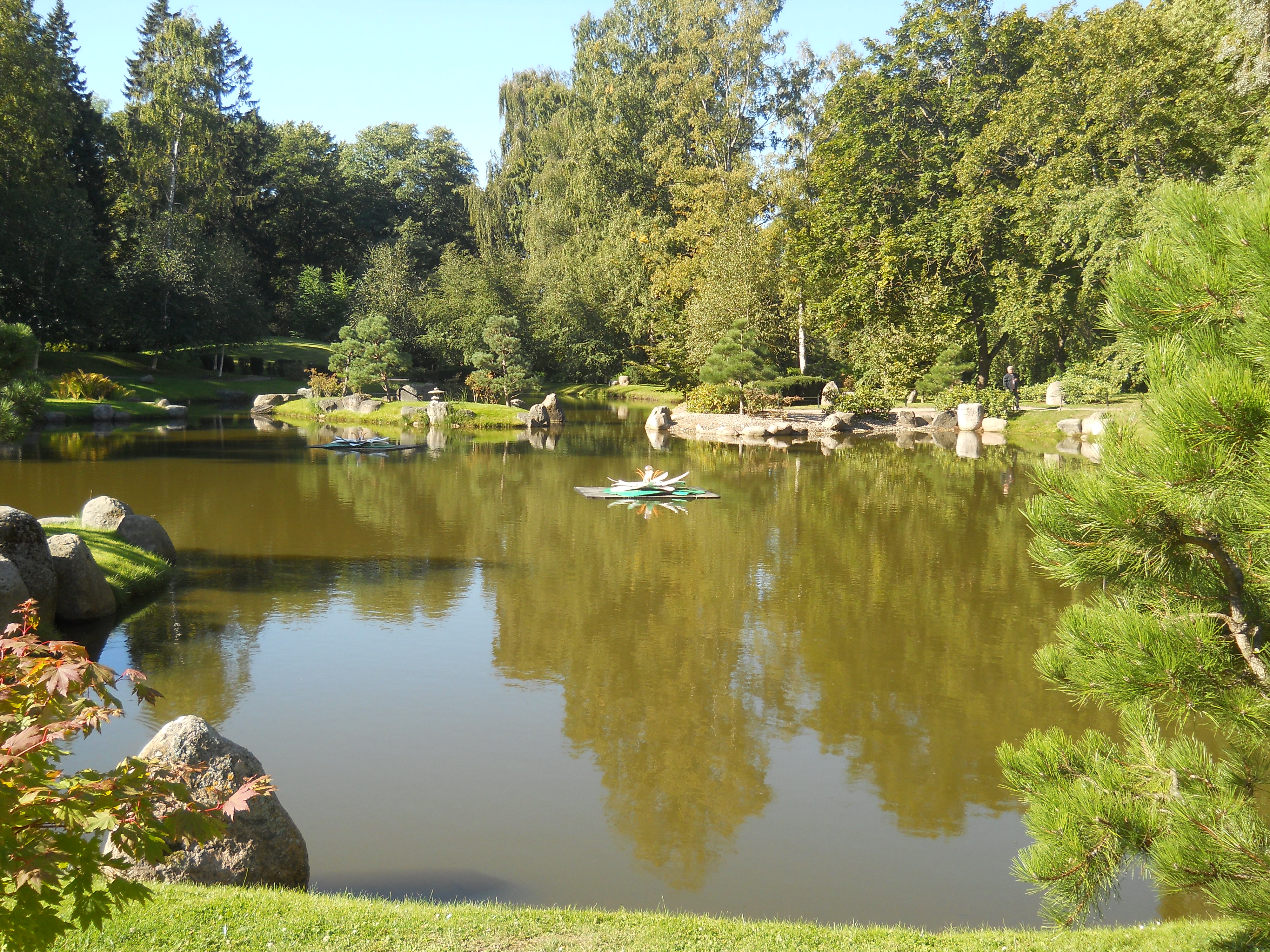
Walking was painful at
first, but the pain gradually diminished.
The longer I walked, the more comfortable I got. I had the same experience the day before. A paradox of my sciatica is that sitting is
comfortable, but the more I sit, the more it hurts when I stand up and start
walking. Walking starts out painful, but
the more I walk, the less it hurts. It’s
all about moving enough to stimulate blood flow.
For lunch, I went back to
the Old Town. While I was eating, I saw
runners going right by the restaurant.
The marathon wasn’t until Sunday, but the 5K, 10K, and half marathon were
all on Saturday. The restaurant where I
was eating was just a block away from the finish line. When I finished eating, I still saw runners
going by. I think I was watching the Youth
5K race.

After lunch, I went exploring
in the Old Town. In contrast to Friday,
when I was following a recommended route, this time I was trying to seek out
streets I hadn’t seen before.
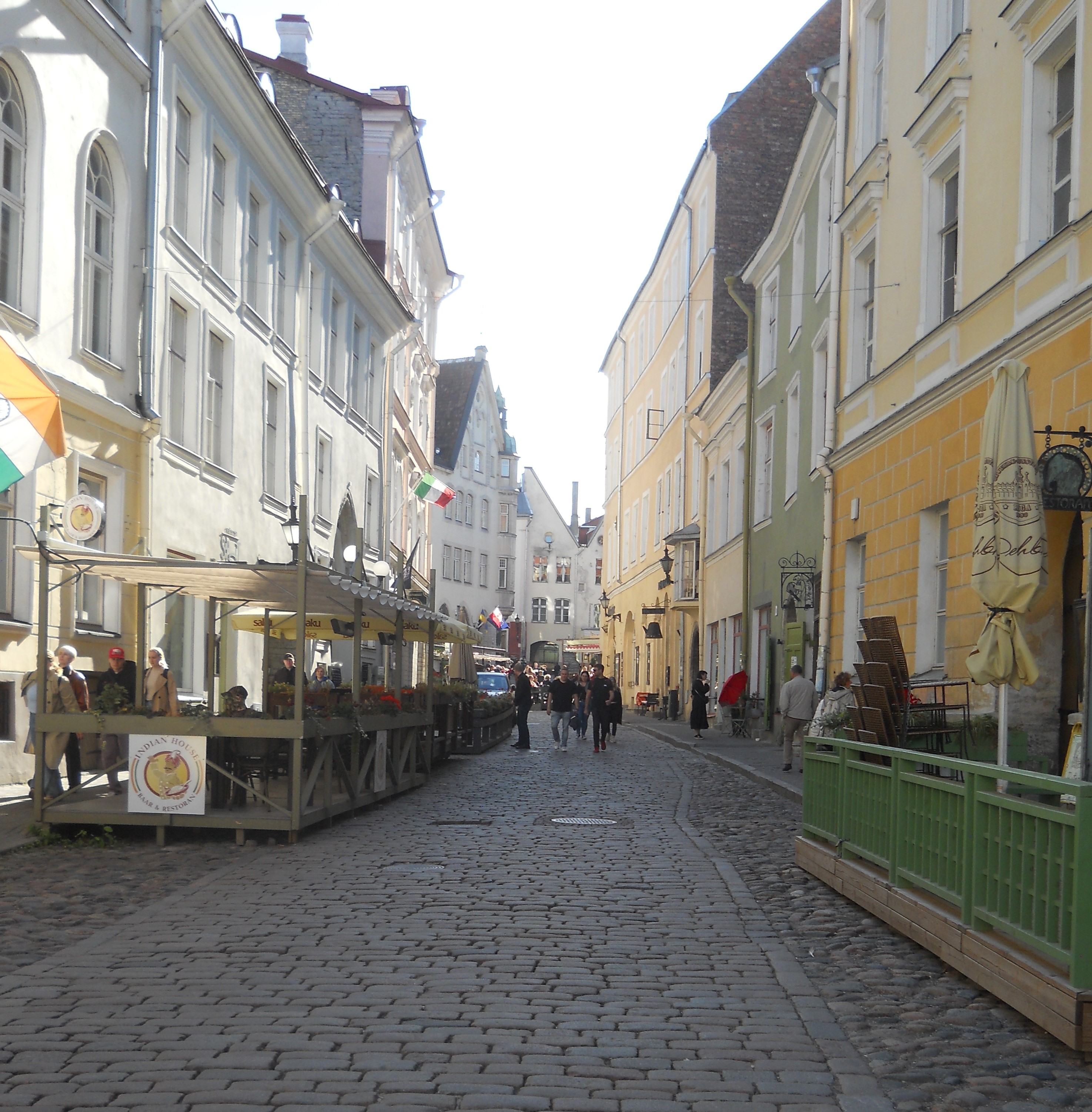
I walked through the Old
Town all afternoon. Before long, my
right leg felt perfectly fine. It was
hard to believe when you consider much it hurt in the morning. It was reassuring to know that I could be
pain-free if I walked long enough. I
would have to wait until Sunday to find out how running felt, but I had reason
to be optimistic.
Later in the day, after
eating dinner, I got up to leave the restaurant, and I was in so much pain I
was walking with a limp. It didn’t
matter how good I felt earlier. After
sitting for a while, I was back at square one.
The pain only went away if I kept moving.
Sunday, September 11
Sunday was race day. I had a restless night, so I woke up still
feeling tired. I also felt really
dry. I wasn’t drinking enough. The race didn’t start until 9:00 AM, so I had
time to eat breakfast before leaving for the race. I emphasized catching up on fluids.
Walking to and from
breakfast was painful. I took some
ibuprofen, but I knew that would barely take the edge off the pain. What I needed was for walking to get more
comfortable with continuous motion. That
wouldn’t happen until the race started.
In the meantime, I had to keep telling myself it would eventually get
easier.
The temperature at the
start was in the 40s. I wore tights and
a short sleeve shirt, but I also wore a Tyvek jacket as I walked to the nearest
tram stop. My legs were cold. I would’ve preferred to have an extra layer
on my legs, but then I’d need to check a gear bag, which would take extra time
both before and after the race. I regretted
not packing a pair of throwaway pants.
Walking to the tram stop
was also somewhat painful. I just had to
hope that I could run without too much pain.
When I got to Freedom
Square, I made a bathroom stop. Then I
started walking toward the start corrals.
There were two other Marathon Globetrotters at this race. They spotted me, because I was wearing a
Marathon Globetrotters hat. The three of
us walked to the start corrals together.
Everyone’s race bib had
their name and the flag of their home country.
One of the things I like about international races is seeing where all
the other runners came from. I saw a lot
of runners from Finland.

The race started near
Toompea Castle, which is at the top of a hill. To get there, we had to walk up some steps and
then continue uphill on the road. My
right leg hurt walking on level ground, but I was fine on the steps. I also felt fine walking uphill.
We started out running downhill. I didn’t know if running would be painful,
and I worried that running downhill would be worse than running on level
ground. Going down the hill, I not only
took short rapid steps, but also kept my knees bent. That worked.
I was able to run with only minimal pain.
As the road leveled out,
I continued to take short rapid steps, but I no longer kept my knees bent. The pace felt fast, but I didn’t worry about
that. I only cared how my right leg
felt. I assumed I could slow down later,
after I got warmed up.
In the next few kilometers,
I still noticed some discomfort in my right leg, but it wasn’t constant. It was more of an occasional thing.
Early in the race, we
crossed some tracks in the street. They
looked like the tracks for a tram. Then
I saw a sign for a tram station. By now,
I had ridden the trams enough that I had the whole map in my head. From the lines that went though this station,
I could tell we were in Kalamaja. This
was a neighborhood I never explored. The
only parts of the city I had visited so far were the Old Town, Kadriorg, and
the neighborhood around my hotel. Other
than the start and finish, the entire marathon route went through parts of the
city I had never seen.
I started out wearing a Tyvek
jacket and gloves, but I didn’t expect to need them for the whole race. After about three kilometers, I started to perspire,
so I took off the jacket and tied it around my waist. I kept the gloves on for another kilometer or
two.
I was starting the race
kind of fast. At first, I was just going
at the pace of the runners around me, but taking short rapid strides made me go
faster than I would if I was taking a more relaxed stride. After a while, I started running with a more
natural stride. To ease the tension in
my lower back, I made a point of bringing my shoulders forward a couple inches. I wasn’t sure if I was actually leaning forward. I have a tendency to lean backwards a little. At a minimum, I wanted to make sure my
shoulders were aligned with my hips.
After about four
kilometers, we were close enough to the Old Town that I could see part of the lower
town wall to my right. Then we turned
left and ran toward the sea.
I’ve done very little
training in the last two weeks. I ran
once. I didn’t do any race-walking. For several days, I wasn’t even doing any casual
walking. If one good thing came out of
this, it was giving the proximal hamstring tendon in my left leg a chance to
heal. In the first four kilometers, I
never felt it.
Then we made another
turn, and I had to step over a curb as we transitioned from the street to a
sidewalk. As I took that step up, I felt
a little soreness in that tendon. It was
only momentary, but it told me it hasn’t healed completely.
There were pace groups,
and the leader of each group had a large white balloon with their target time
written on it. I could tell a pace group
was right behind me when I saw the shadow of one of these balloons. I didn’t see what was written on it, but from
the pace I had been running so far, I assumed it must be the 4:15 pace group. For the next several kilometers, I was running
just ahead of them.
I was a bit puzzled when
I came to in intersection and saw a few runners turning to the left, but the
runners just ahead of me were directed to turn right. When I got there myself, I realized what was
happening. No matter which way you went,
you traveled about 50 meters and then crossed the street and came back. There were two possible routes, but they were
the same distance. The race volunteers
would direct runners one way for a few minutes, and then switch.
We were crossing a busy
street. If we went straight across, they
would need to hold up traffic until all the runners went by. Doing it this way, they could create a gate
through which cars could be moved across the intersection a few at a time. Later, I saw them do something similar in a
few other places. I’ve seen this same
technique in a few other races so let pedestrians cross the course.
Over the next several
kilometers, I stopped having any discomfort in my right leg. Running works just like walking. It hurts when I start, but if I keep moving
long enough, I’m pain-free.
Running just in front of
the 4:15 group felt easy enough at first.
Then I started to feel like the pace was tiring. The course was marked in kilometers, but my
watch was giving me splits for each mile.
When I got the next split from my watch, I saw that I had sped up by
about 20 seconds. No wonder the pace felt
tiring. After that, I settled back into
my previous pace.
At 14K, the pace group passed
me. Now I could see for sure that it was
the 4:15 group. The pace didn’t feel
unsustainable, but I was pretty sure it was.
I was in a good rhythm, so I kept running at the same pace. Now instead of running just ahead of the
group, I was right in the middle.
There’s a reason why I
prefer to run in front of a pace group.
Behind the pace leader it gets congested, as everyone is trying to stay
close. We were almost to the 15K mark
when the runner behind me stepped on the back of my left foot. I was at the point in my stride where I was
lifting my trailing foot, but his foot pinned my foot to the ground. I felt a sharp pain. From the location, I could tell it was my
proximal hamstring tendon. Any recent
healing was undone in a moment. After that,
it felt sore all the time.
At first, I dropped back from
the 4:15 group, but I found myself catching up again. I had to slow down to keep from passing them.
I think the pace leader saw that they
were going a little fast, so he slowed down.
I didn’t think I could
sustain this pace for the whole race, but I set a goal of keeping up with the
group for the first half of the race. Rather
than run right behind them, I went back to running just ahead of them.
The aid stations were
spaced farther apart than I would’ve preferred.
They seemed to be about 5K apart.
They had water and a sports drink of some kind. I usually drank the sports drink, but at one
aid station, I accidentally took the water.
I didn’t think I was drinking enough, so I also took a cup of the sports
drink.
The cups at the aid
station were plastic. They were rigid,
so you couldn’t flatten them to make drinking easier. That forced me to slow to a walk while I drank. Walking long enough to drink two cups caused
me to fall behind the 4:15 group. This
was at about 19K.
At first, I decided not to
try to catch up. I stopped looking at
the group ahead of me. Instead, I put my
head down and ran at my own pace.
It turns out my own pace
was the same as their pace. For the next
kilometer, I was staying the same distance behind them. Then I started to catch up. I didn’t notice when I passed them, but I was
running in front of them when I reached the halfway point.
Now I wanted to see how
long I could keep up with the group. I
took it one kilometer at a time. I was
still ahead of them at 22K, then 23, then 24.
I set a goal of staying ahead of them to 28K, which is roughly two
thirds of the race.
Most of the runners ahead
of me were starting to slow down. I started
to focus on reeling in and passing the runners ahead of me.
During this stretch, I saw
something unexpected. There was a guy
ahead of me with a nice efficient race-walking stride. It’s not that unusual to see someone walk a
marathon. I’ve done it several
times. What was unusual was his
pace. I was on pace for 4:15 and he was
ahead of me. I eventually passed him,
but he was still in front of the 4:15 group.
Somewhere around the 15th
mile, I started to get carried away. I
was no longer staying just ahead of the 4:15 group. I was pulling away from them. I ran one mile in 9:20. I ran the next one in 9:16. Then I sped up slightly to 9:15. In three miles, I gained a minute and a half
on the 4:15 group.
I couldn’t keep that up
much longer. By 19 miles, I had slowed
to the same pace I was running in the first half of the race. I had just over seven miles to go, but I knew
at some point the wheels would come off.
Sometime after 20 miles,
we had to run on a long section of boardwalk, as we crossed a marshy area. There were small gaps between the wood planks,
and I worried about catching my foot on one of the boards. I ran somewhat conservatively.
I was about three quarters
of the way through that section when I heard some cheering in the
distance. I looked in the direction of
the cheering. The moment I took my eyes
off the boardwalk, I tripped on a board and fell.
I got up quickly and
resumed running, but I wasn’t going as fast now. That fall took something out of me, both
physically and mentally. My hands both
hurt from hitting the deck, but they weren’t bleeding.
When I got to the 34K
sign, the 4:15 group passed me. That
surprised me. I knew they’d passed me eventually,
but I thought I was still about a minute ahead of them. Getting passed so suddenly was demoralizing.
At first, I didn’t try to
keep up with them. I drifted back from
the group. At about 35K, I changed my
mind. I had recovered somewhat from my
fall, so I tried to catch up with the group.
With effort, I could
match the pace of the group, but I couldn’t gain any ground. After about a mile of chasing them, I finally
had to give up.
Although I couldn’t keep
up with the group, I was still passing most of the other runners. That lasted until the last 5K. Then I came unglued.
Earlier, I wasn’t sure if
I was leaning forward or just compensating for my tendency to lean backwards. Late in the race, I noticed fatigue in my
upper back and the back of my neck. I
probably was leaning forward a little.
When I got my split for
mile 24, it was a full minute slower than the pace I had been running for most
of the race. I could still break 4:20,
but only if I held my current pace. I
didn’t.
When I saw the 39K sign,
I knew where I was. I had seen this same
sign earlier in the race. We were repeating
a section of road that we had run on in the first 5K.
Just past 40K, I reached
the point where we had previously turned left and headed toward the sea. This time, we turned right and headed toward
the Old Town.
My pace continued to
deteriorate. My only goal now was to
finish, but it wasn’t easy. In mile 25,
I slowed down another 45 seconds. Mile
26 was even slower. According to my
watch, I only had 0.2 miles to go, but I knew that was wrong. My watch was reading high. I had more like 0.3 miles to go.
I came around a bend and
saw the last turn. I knew what the
finish looked like. As soon as I turned
that corner, I had to run uphill to the finish line. It’s the only noticeable hill in the race,
but it comes right at the end. It seemed
like it took forever to get up that hill.
By my watch, I finished in 4:20:32. When I got my official time, it was 4:21:19. Presumably, they only list gun times. The last five kilometers were ugly, but I couldn’t be disappointed with that time. It was my fastest marathon since early May, despite the injuries and the lack of recent training. I don’t honestly know how I did that.
The first volunteer I
passed gave me a heat shield. I was hot
after running up that hill, but I knew I might get cold on my way back to the
hotel.
Another volunteer tried
to hand me a large bottle of water and a large bottle of sports drink. I took the sports drink, but declined the
water. The next two volunteers handed me
a candy bar and a granola bar. Then I
got my finisher medal. The medal depicts
Toompea Castle, which is right next to the start/finish line.

Walking through the
finish area was tiring. When you cross
the finish line, you’re not done with the hill.
I had to keep walking uphill until I reached the top.
One of the major sponsors
of this race is a brewery. At the top of
the hill, they were handing out cans of non-alcoholic beer.
I knew if I stopped, I’d
get cold, so I kept moving forward until I reached a tram station. Then I got back to the hotel as quickly as I
could. I had to sit while I waited for
the next tram. I also had to sit as I
rode the tram. I was worried my leg
would hurt when I started walking again, but it didn’t.
What did hurt was my
hamstring tendon. Sitting down is now
painful.
Monday, September 12
When it comes to
international trips, the adventure isn’t over until you get home. To get home in one day, I had to leave
Tallinn on an early flight to Amsterdam.
To get to the airport early enough I had to get up at 4:00 AM.
Standing up and walking wasn’t as painful as it was the previous
two mornings. That was a relief, since I
had to do lots of walking through airports wearing a backpack with my laptop
and other electronics.
When I turned on my phone, I saw an email from Delta. My flight from Amsterdam to Minneapolis was going to be delayed 50 minutes. That wasn’t bad news. The extra time in Amsterdam gave me a nice safe connection.
After I got to the
Tallinn airport, I saw another email from Delta. Now my flight was delayed three hours. Assuming there wasn’t any additional delay, I
was going to have a five hour layover in Amsterdam.
The flight to Amsterdam
was only two hours, but I struggled to keep my eyes open. The lack of sleep caught up to me all at
once. On top of that, sitting was
painful.
When I got off the plane,
walking was somewhat painful. When I
picked up my suitcase, the pain kicked up a notch. It was going to be a long day.
The passport control line
in Amsterdam was the longest I’ve ever seen.
Thankfully, as a U.S. passport holder, I could use the self-service
line. That line was also long, but it
moved faster. It only took me about 20
minutes to get through.
My second flight didn’t
take off until 2:00 PM, and it was a nine hour flight. By the time I arrived in Minneapolis, I had
been awake for more than 20 hours. I was able to sit more comfortably on the long flight, but my sciatica was pretty bad when I got off the plane.


