On November 17, I ran the Bangkok Marathon. This was the first half of a two-part Asian
trip. I’ve been interested in running a
marathon in Thailand ever since my friend Maricar traveled there. I didn’t get serious about going there this
year until I noticed that this race and the Bagan Temple Marathon in Myanmar
were six days apart.
A few years ago, some of my friends did the Bagan Temple
Marathon with Marathon Tours & Travel, and they loved it. The itinerary for that trip required arriving
in Yangon, Myanmar on November 20.
That’s three days after the Bangkok Marathon, which was convenient
timing. There are multiple airlines with
non-stop flights between Bangkok and Yangon.
The Bangkok Marathon has a midnight start. Technically, the race is on Sunday, but it
seemed more like a Saturday night race.
That meant my last opportunity to get a full night’s sleep was Friday
night. For that reason, I wasn’t
comfortable arriving any later than Thursday.
That was problematic.
I ran a marathon in Havana the previous weekend, and I didn’t get home
until late Monday night. The only way to
get to Bangkok by Thursday was to leave early Wednesday morning. Even then, I wouldn’t get there until after
11:00 PM on Thursday night.
I couldn’t get there in less than three flight
segments. Delta recently added flights
from Minneapolis/St. Paul to Seoul/Incheon, but they don’t fly that route every
day. Wednesday, unfortunately, was the
wrong day. I had to change planes in
Seattle and again in Seoul/Incheon. To
ensure safe connections, I had to leave Minneapolis at 6:55 AM. That meant leaving home by 4:30. I’ve rarely been able to sleep on airplanes,
and this was a long trip, so starting the trip tired wasn’t ideal.
The day before I left, I started having symptoms of a
cold. For almost a week, I was averaging
between three and four hours of sleep.
That eventually caught up to me.
All day Tuesday, I had a mild case of post-nasal drip. During the night, I started to feel a sore
throat. I didn’t have any other symptoms
yet, but it wasn’t the best way to start the trip.
My longest flight segment was a 12 hour flight from Seattle
to Seoul/Incheon. I was originally
booked in a Premium Select seat. That’s
something new. It’s not first class, but
it’s more comfortable than economy. The
day before the trip, I called Delta to ask if I could use miles to upgrade to a
first class seat. I could, and it only
cost me 45,000 miles. That’s a bargain to have a seat that reclines completely
flat for a 12 hour flight. That gave me
a realistic chance of getting some sleep on the flight.
Wednesday, November 13
During the night, I started to have a sore throat. After getting up, I was back to just having
post-nasal drip. At this point, I was
still clinging to hope that I could fight off the cold.
My flight to Seattle arrived about 30 minutes early. That gave me a three hour layover before the
long flight to Seoul/Incheon.
About halfway through my flight to Seoul/Incheon, I felt
sleepy, so I took a nap. Being able to
recline completely flat is a game-changer.
I’ve never been more relaxed or more comfortable on an airplane. It took a long time to fall asleep, but then
I slept for at least an hour. That was
enough sleep to tide me over, but not so much that it would be more difficult
to adjust to the time zone in Bangkok.
When I woke up, I felt slightly congested. I was no longer optimistic about beating the
cold. I assumed at this point that I
would gradually develop all the other symptoms.
Thursday, November 14
Toward the end of my second flight, we crossed the
International Date Line. Now instead of
Wednesday afternoon it was Thursday afternoon.
As we began descending, I felt some discomfort in my
ears. I feared they would get more
painful as we continued to descend, but they didn’t. They gradually adjusted to the change in air
pressure. I was still only partially
congested.
I arrived at the Seoul/Incheon airport in the late
afternoon. After another two and a half
hour layover, I finally flew to Bangkok.
The last flight was only five and a half hours, but boarding was delayed,
because of a last minute change in aircraft.
Everyone needed to get new seat assignments. By the time we took off, we were already 40
minutes behind schedule.
To save time on arrival, I didn’t check a bag. I’ve never been good at packing light. Fitting everything I needed for a two week
trip into a carry-on bag wasn’t easy, but I managed to do it. After getting off the plane, I went straight
to the long line for passport control.
Because I arrived so late, I spent my first night at an
airport hotel. The Novotel Bangkok
Suvarnabhumi Airport is connected to the airport terminal by a tunnel. By the time I got there and checked in, it
was already after midnight. I wanted to
get to sleep as quickly as I could. When
I got to the room, the AC wasn’t on. It
took me a while to find the climate control.
It was set to 23 degrees Celsius.
When I turned it down, I could feel cool air coming out of the vents,
but it would take time to get the room cooled down.
Friday, November 15
At 1:30 AM, I finally tried to go to sleep. I set my alarm for 9:30. In theory, I could get eight hours
sleep. It didn’t work out that way.
As I tried to figure out how to turn off all the lights, I
inadvertently turned off power to the climate control. I turned it on again, but it reset to 23 C. I didn’t notice that. I went to bed thinking the room was cooling
off, but it was actually starting to warm up again. I tossed and turned for hours before
realizing the room was getting warmer.
At 5:00 AM, I noticed the climate control was set to 23 C. I got up and changed it, but it took time for
the room to get cool. I eventually fell
asleep, but I only slept for about two hours.
That was a lost opportunity.
When I woke up, my congestion was worse. Did I mention this wasn’t the best way to
start a trip?
I lost both Wednesday and Thursday to air travel, so I was
overdue for a run. When I got up, I went
to the hotel’s fitness center and ran for an hour on one of their treadmills. That workout seemed like a turning
point. Despite my cold and my lack of
sleep, I felt OK for the rest of the day.
My room rate included my choice of breakfast or lunch. By the time I was dressed, it was time for
lunch. I had the lunch buffet in the
hotel’s Japanese restaurant. The buffet
was a fusion of different styles. I had
an eclectic selection that included sushi, pumpkin curry stir fry, pizza, and crème
brulée for dessert.
I was able to get around Bangkok using public transportation. There’s a train into the city from the
Suvarnabhumi airport. In the city, I
used a combination of sky trains and MRT (subway). One of the MRT lines was recently extended
through the “old city,” making it easier to get to my hotel.
For the next five nights, I stayed at Riva Arun Bangkok. This hotel was located on the Chao Phraya
River, directly across from Wat Arun (the Temple of Dawn). My room had a balcony with this view.

I was impressed with the service at this hotel. They brought me a small pot of green tea to
drink while they were filling out my paperwork and checking to see if my room
was ready. They escorted me to my room
and one of the employees gave me a tour of the room.
After unpacking and making sure the AC was on, I took the
trains to the Marriott, where my friends Shannon and Eric were staying. We spent the evening at the Octave Sky Bar on
the roof. We stayed long enough to see
the city at night. Then we went down to
the 45th floor to eat dinner.

By the time I got back to Riva Arun, my room was nice and
cool, and I was ready to get some sleep.
Before bed, I stepped out onto the balcony to see the view of Wat Arun
at night.

I had no trouble getting to sleep that night, and I slept
for most of the night.
Saturday, November 16
I had breakfast at the hotel’s rooftop restaurant. From there, you not only have views of the
river and Wat Arun, but you can also see Wat Pho.

After breakfast, I took a tour of the Jim Thompson House
Museum. Jim Thompson was an architect,
designer, and textile colorist who revived the silk weaving industry in
Thailand. He designed his home, which
consists of six teak buildings of traditional Thai architecture. His home is furnished with an extensive
collection of paintings, sculptures, and porcelain. Some of the pieces are as much as a thousand
years old.
In 1967, Jim Thompson went missing while hiking in the
jungle in Malaysia. To this day, nobody
knows what happened to him. His home is
now a museum.

From the Jim Thomson House Museum, it was a short walk to
the National Stadium, where packet pickup for the race was being held. With my race packet, I got both a T-shirt and
a singlet. On my way back, I saw someone
grilling chicken and pork kebabs, so I had street food for lunch.
After dropping off my race packet at the hotel, I went out
to explore the neighborhood. I walked
past Wat Pho, the Grand Palace, and Wat Mahathat. Along the way, I passed numerous small shops
and street vendors. Then I stopped to
explore the amulet market. This is a
narrow alley lined with dozens of vendor selling amulets and other souvenirs.


On my way back to the hotel, I explored some of the small
shops near Chang Pier. Wherever I went
in the old city, I saw tributes to the royal family.

Shannon was also doing the marathon, so she and Eric stayed
at Riva Arun Bangkok the night of the race.
I got back to the hotel just as they were checking in. Shannon still needed to pick up her race
packet. While they were going to the
expo, I explored a different part of the old city.
This temple is called Wat Suthat. The large red structure next to it used to be
the support for a giant swing. The giant
swing was used as part of religious ceremonies, but the practice was stopped
after several fatal injuries.


I had dinner with Shannon and Eric at an Italian restaurant near
Khau San Road. The restaurant was on such
a narrow alleyway, that we would have missed it if not for using my phone for directions. We all had pizza, and it was excellent.
As we were walking back from dinner, all the temples and
government buildings were lit up. This
is the Supreme Court and the Grand Palace,


Here’s Wat Pho at night, viewed from the roof of our hotel. In the distance, you can also see parts of
the Grand Palace and the Rama VIII Bridge.

I still had four and a half hours before the race, so I
decided to try taking a nap. I never take naps, but this was an unusual
circumstance. It was already well after
dark, I had a huge sleep deficit, and I was going to be running through the
night.
I set an alarm and went to bed. Before long, I fell asleep. Before I knew it, I woke up from a two hour
nap. I can think of plenty of races with
normal start times where I got less sleep than that.
I was feeling pretty good.
The nap energized me. It even seemed like my cold was breaking up. I didn’t have any new symptoms, the post nasal
drip was gone, and I didn’t have as much congestion. I took a shower and started getting dressed.
I hadn’t noticed any mosquitoes since arriving in Bangkok,
but Eric noticed one at dinner. I was
going to have a lot of exposed skin during dinner, so I used lots of insect
repellant. I didn’t have to worry about
sunblock.
At 11:30, I met Shannon in the lobby, and we walked to the
start. It was a 10 minute walk. I’m glad I used the bathroom before leaving
the hotel, because I didn’t see any port-o-potties anywhere in the start area.
Before the race, there was a brief drum ceremony. Shannon took this video of part of it.
Then they led us through a 10 minute warm-up routine. I’ve seen similar things in a few European
races, but this had an Asian flavor. It was energetic.
Sunday, November 17
One might assume they hold the race at night so we don’t
have to endure the radiant heat of the sun.
That might be the case, but I suspect it was for another reason. Between midnight and 6 AM, it’s easier to
close down the roads. A majority of the
course was on a major highway and the highway was completely closed to traffic.
The course is mostly out-and-back, starting and finishing in
front of the Grand Palace.
I assumed the course would be lit, but I had a small
flashlight with me, just in case.
Shannon and I ran together for the whole race. Neither of us was planning to go all out for a
fast time. We paced ourselves
conservatively, respecting the heat. We
just wanted to finish.
For the first kilometer or so, we were running along the
same street that we had walked going to and from dinner on Saturday. We once again got to see familiar landmarks
like the Ministry of Defense and the Supreme Court. We continued through busy streets for another
kilometer and a half. We ran past the
Democracy Monument, which was lit up beautifully, but I didn’t have a camera
with me. It didn’t want to get my camera
saturated with sweat.
At the start of the race, the temperature was in the low
80s, with stifling humidity. The
temperature gradually dropped during the race, but the humidity never got any
better.
They had water stations every two kilometers. That was very consistent. I don’t recall seeing any odd numbered
kilometer markers, but the even ones were always right at an aid station.
After two and a half kilometers, we went up a ramp that took
us onto Rama VIII Road, named after the eighth king of Siam. After about four kilometers, we crossed the
Rama VIII Bridge over the Chao Phraya River.
The bridge supports were lit up.
That’s a photo I would have taken if I had a camera. As we crossed the bridge, I took in the views
of the river.
Shortly after crossing the bridge, we turned onto a
highway. We were on that same highway
for most of the race.
Most of the course was well-lit, but there were a few brief
sections where the street lamps weren’t on.
I never needed to use my flashlight, but I did need to pay more
attention, so Shannon and I didn’t get separated.
As we were nearing the end of the eighth kilometer, Shannon
said she needed to slow down. I didn’t
realize it, but she was really struggling with the conditions in the early
kilometers. Around the same time, a
runner from Ireland asked me if I spoke English. He wanted to know how far we had gone. I could see the next aid station just
ahead. I told him this aid station was
8K. He ran with us for several
kilometers and we had a nice conversation.
We slowed down a bit, and before long, Shannon was feeling
better. The highway wasn’t very exciting
as far as scenery goes, but it was usually at least 50 feet above ground
level. Before we got onto the highway,
there wasn’t any breeze. Now that we
were up higher, we had just enough of a breeze to help with the humidity. That really made a difference. It’s the reason Shannon started feeling
better.
The 8K aid station was the first one to have Gatorade. Before that, we could only drink water. After that, we saw Gatorade at about one
third of the aid stations. Later in the
race, we started to get excited if we approached an aid station and saw
Gatorade banners.
Even though the aid stations were frequent, I found myself
needing to drink two cups at each aid station.
I was sweating like crazy.
I think we were about 15K into the race when we started to
see elite runners already coming back.
There was a lead pack of about eight runners who were all still
together. I’m sure the race for first
place got exciting later.
For most of the race we were running in the westbound lanes
of the highway. Around 19K, we made a
U-turn into the eastbound lanes. We
continued east for about two kilometers before turning around to retrace our
route back toward the city center.
I rarely looked at my watch, but we reached the halfway mark
in about 2:05. Before the race, Shannon
was guessing we might run the marathon in 4:15.
Now that we were half done, she said she was hoping to finish somewhere
between 4:15 and 4:30. She didn’t seem
confident that we would break 4:30. I
assumed we would slow down, but I didn’t think we would slow down that much.
Coming back, we spent longer at the aid stations. Shannon was drinking two cups, pouring one
over her head and putting ice in her shirt.
We walked through the aid stations, but between them, I think we still
ran at the same pace. I was hot enough
to feel sweaty, but I never felt the need to pour water over my head. The pace we were running usually felt
somewhat comfortable, so I wasn’t overheating.
There weren’t any port-o-potties anywhere on the
course. About two thirds of the way
through the race, I cut back to only drinking one cup at each aid station. At this point, I knew I wouldn’t get
dehydrated. I wanted to make sure I
didn’t need a bathroom stop.
There was a half marathon that started later than the
marathon. With a little over 10K to go,
we passed their turnaround point.
Suddenly the road got much more crowded.
Shannon and I had to pay close attention to keep from getting separated,
particularly at the aid stations and on the few sections of the course that
were dark.
For the rest of the race, we just needed to grind it
out. We were hot and tired, but the
remaining distance gradually got more manageable. With about 5K to go, I saw something in the
distance that was lit up, but it was high in the air. I assumed it was the top of a building, but I
couldn’t see anything underneath it.
When I mentioned it to Shannon, she recognized it. It was the top of the Rama VIII Bridge. As we went around a corner and saw it form a
different angle, I could make out the entire bridge support.
When we crossed the bridge again, we had about 4K to
go. The last 4K wasn’t the same as the
first 4K. We took a different route
through the old city.
With about 2K to go, I looked at my watch. Shannon didn’t want to know if she was going
to break 4:30 or not. I could see we easily
would, but I kept that to myself.
We passed Sanam Luang.
This is a large park where prominent events are held. We ran past it earlier in the race, but this
time we were on the opposite side. I
didn’t know exactly what our route to the finish was, but I knew where we
were. In the distance, we could see the
tops of some of the temples.
We turned left just before the Grand Palace. Then we turned right to make our final
approach to the finish line. We crossed the line in 4:20:42.
At first, I didn’t see where we were supposed to get our
medals. Then I remembered a tent we
walked by before the race. It had a sign
that said something like, “Hand out finisher coin.” We assumed that meant medal. We looked for the tent. In front of it, there were volunteers handing
out the medals.

As we continued through the finish area, I started to see
other runners carrying T-shirts in sealed bags.
We already got a T-shirt and a singlet at packet pickup. Were we really going to get another
shirt? Shannon was skeptical, but I also
remembered passing a tent with a sign that said, “Hand out finisher
shirt.” Sure enough, we found the tent
and got our finisher T-shirts.
Out last stop before leaving the finish area was the food line. Our post-race food included giant prawns and
a large bowl of tasty soup. We also got
bags with other post-race snacks.
As we left the finish area, we saw Eric. He had just walked over from the hotel. He arrived at the same time we were leaving
the finish area. That was amazing
timing.
We sat down on the curb to eat our post-race food. Then we walked back to the hotel. My first priority was to get out of my wet
running clothes. I didn’t want to put my
wet clothes on the hardwood floor of my room, so I put them out on the
balcony. Then I took a shower. I had to wait for my hair to dry before going
to bed. By the time I was ready, it was
more than an hour since we had finished the race. It was still dark outside, so I was hopeful I
could get to sleep. I didn’t need a
full-night’s sleep. I just needed a
nap. I was awake for a long time. Eventually, I noticed light filtering in from
outside. I kept trying to sleep, but
eventually I had to go to the bathroom.
When I looked at the time, it was two hours after going to
bed. It’s possible I fell asleep without
realizing it. It didn’t seem like I had
been awake in bed for two hours.
I got dressed and met Shannon and Eric in the lobby. They were flying to Chiang Mai, but they had
time to tour the Grand Palace before heading to the airport.
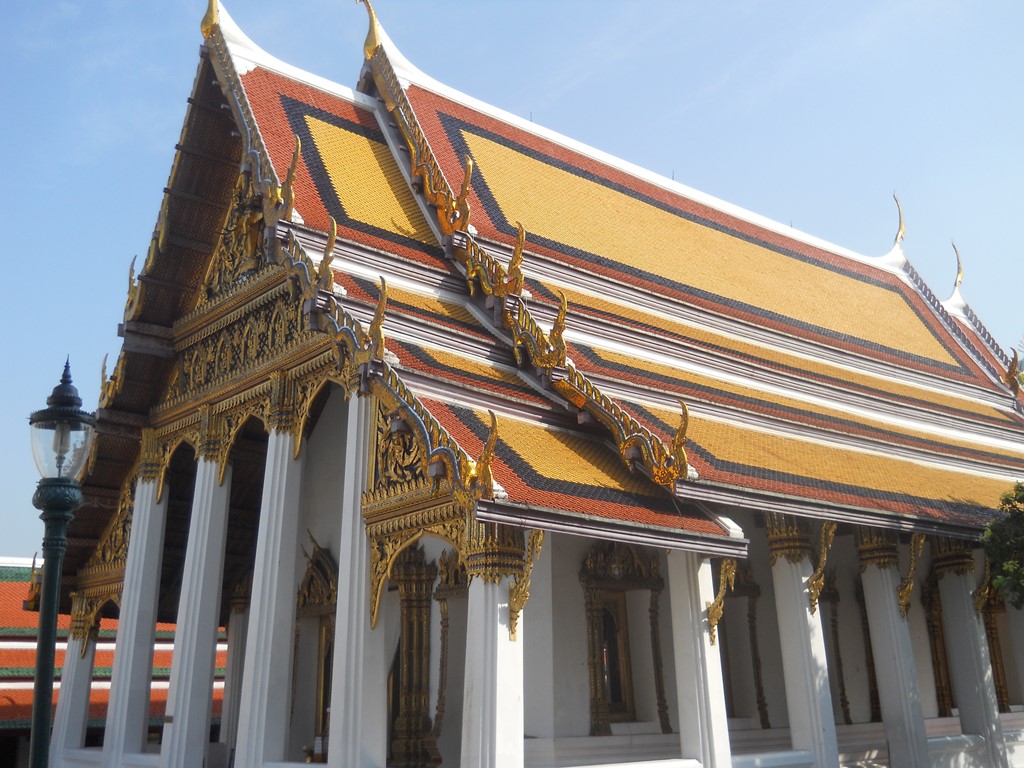
The Grand Palace is large and incredibly ornate. I took dozens of photos. It was tough to select just a few, but here
are some of my favorites. The highlight
of the palace was Wat Phra Kaew (the Temple of the Emerald Buddha), but we
couldn’t take pictures inside the temple.




After cooling down, I had lunch at a restaurant a few blocks
from the hotel. After lunch, I explored
Chinatown. At first, I wandered somewhat
randomly through the narrow streets, past food vendors and narrow shops selling
just about everything.


It’s a shame I went there so soon after lunch. Some of the food looked good, but I wasn’t
hungry. The only thing I bought was some
fresh pineapple. My last stop before
leaving Chinatown was Wat Mangkon, a Chinese Buddhist temple.

I had time to do more sightseeing, but I was too tired. It was a sunny afternoon, with temperatures
in the low 90s. Spending so much time
walking around outside wore me out. It
didn’t help that I spent most of the previous night running instead of
sleeping. I went back to the hotel and
relaxed in the shade on my balcony, watching boats on the river. I waited to see the sunset behind Wat Arun.

There are plenty of good restaurants in the neighborhood of
my hotel, but as I started walking to dinner, I noticed that most of them were
already closed. The one I went to was
still open, but I had to order quickly.
I ended up ordering more food than I really needed. Their prawn spring roll was listed as an
appetizer, but it was a whole plate of spring rolls. After eating that, I struggled to find room
for my entrée.
I went to bed shortly after dinner. That night, I crashed hard and slept for nine
hours. I really needed that.
Monday, November 18
After breakfast, I went to Wat Pho. As with the Grand Palace, it’s hard to
capture the grandeur if this place with just a few photos.


Within Wat Pho, there are several temples. In one of them, I had the opportunity to sit
on the floor and relax for several minutes while listening to a dozen monks
chanting in unison. The best known
temple at Wat Pho holds the world’s largest reclining Buddha. You have to see it with your own eyes to
appreciate how big it is.

Next, I took a ferry to the other side of the river to see
Wat Arun.

From in front of Wat Arun, I could see my hotel across the
river.

When I checked in at Riva Arun on Friday, they gave me a voucher
for a 24-hour unlimited ride pass on one of the hop-on, hop off tourist boats
on the Chao Phraya River. One of the
stops was a pier next to Wat Arun.
There were nine different piers where you could get on or
get off. I mostly just wanted to ride
along the river and enjoy the views.


I ended up getting off in three places. Everyone had to get off at the Sathorn, which
was the southernmost pier. While I was
waiting to board the next boat going north, I visited this Hainanese temple.


We also had to get off at the northernmost pier. From there, I could see the Rama VIII Bridge,
which we ran across during the marathon.

I was planning to get off at this pier anyway, as I hadn’t
had any lunch yet, and there were several restaurants nearby. I found one called Mango House, where I had
this fruit and waffle concoction called Mango Paradise.

My last stop was near the Pat Klong Flower Market. Like other marketplaces I visited, this one had
narrow alleys and small shops. Here,
all the shops were selling flowers.


I was done with the hop-on, hop-off boat, but I wasn’t done
visiting temples. From the flower
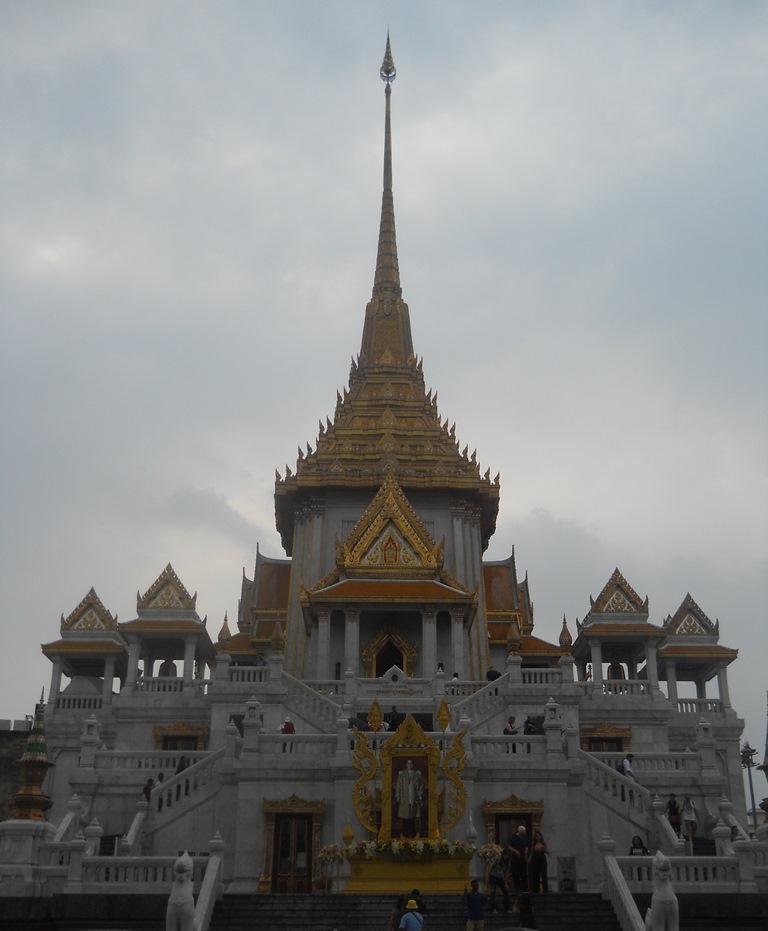
market, I took the MRT to Wat Traimit (the Temple of the Golden Buddha). This temple holds the world’s largest solid
gold Buddha.

It started raining just before I got to Wat Traimit. All morning and afternoon, the heat index was
above 100 degrees, so the rain felt good at first. To enter any temple, however, you have to leave your
shoes outside, and the shoe racks were a good distance from the entrance to the
temple. By the time I left, my shoes and
socks were fairly wet. When I got back
to the hotel, I had to change into dry clothes and shoes.
I was hoping to get up early on Tuesday, so I wanted to stay
close to the hotel for dinner. You can’t
get much closer than the hotel’s rooftop restaurant. After dinner, I got to bed as early as I
could.
Tuesday, November 19
It’s tough to find a good place to run in the old city. The streets are busy, and the sidewalks are
crowded. The only time you can run on
the sidewalks is during the pre-dawn hours.
I got up early, so I could go for a run while I had the chance.
By now, I knew which streets had wide sidewalks and were
well lit at night. I mostly stuck to
streets I had run or walked along before, but at one point I crossed a bridge
over a canal with the intent of running back on the opposite bank.
A security guard immediately said something to me. I stopped and turned toward him. I was nervous, because foreign visitors are
supposed to have their passports with them at all times. I didn’t have mine with me while I was
running. That wasn’t his concern. He was just telling me I couldn’t go that
way. His tone wasn’t at all
menacing. In fact, he was smiling and
apologized for having to stop me. That’s
Thailand in a nutshell. It’s the land of
smiles.
As I finished my run, there was more traffic in the streets,
but the sidewalks still weren’t crowded.
In all, I ran a little over seven miles, finishing a few minutes after
sunrise.
While I was up on the roof eating breakfast, I noticed it
was really hazy. Buildings that were
only five miles away were barely visible.
By the time I was done eating, the smog was beginning to bother my
eyes. This was the first day it was like
that.
It seemed like a day for indoor activities. As soon as it opened, I went to Museum Siam,
which was only a few blocks from my hotel.
Museum Siam is a cultural museum, that attempts to define “Thai-ness”
and how it has changed over time. It has
14 exhibits. I found the first several
exhibits easy to understand. That last
few made me realize how little I still understand Thai culture. It would be interesting to come back to this
museum after an extended stay in the country.
I had lunch at one of the many small restaurants near the
hotel. Their menu struck me as a mixture
of Thai food and entrées I think of as Chinese.
I saw the same thing at other restaurants. That reminded me of one of the exhibits at
Museum Siam. Even people from Thailand
can’t always agree on which foods are genuinely Thai and which foods are Thai
versions of foods from neighboring countries.
By now, the air quality had improved, so I was no longer
limited to indoor activities. I
reluctantly changed into a long-sleeved shirt and went out to see one more
major temple. I could have walked the
whole way, but I rode the MRT for one stop so I wouldn’t have to spend as much
time in the afternoon heat. This is Wat
Saket (the Temple of the Golden Mount).


When I got back to the hotel, I found out there was going to
be a rehearsal later in the afternoon for a royal barge procession that’s going
to take place in December. Most people
were watching from the roof, but I could watch it from my balcony.

In the evening, I walked up to Khao San Road. This is the shopping and nightlife spot for
young people backpacking across Asia. I
had to at least check it out, so I found a place to eat dinner there.

Wednesday, November 20
Today I fly to Myanmar to begin part two of my Asian
adventure.
To be continued…
Race Statistics
Distance: 42.2 kilometers
Time: 4:20:42
Average Pace: 6:11
per kilometer (9:57 per mile)
Lifetime Marathons/Ultras:
392
Countries: 40


