Sunday, June 2, 2019

Race Report: 2019 FANS 24-Hour Race


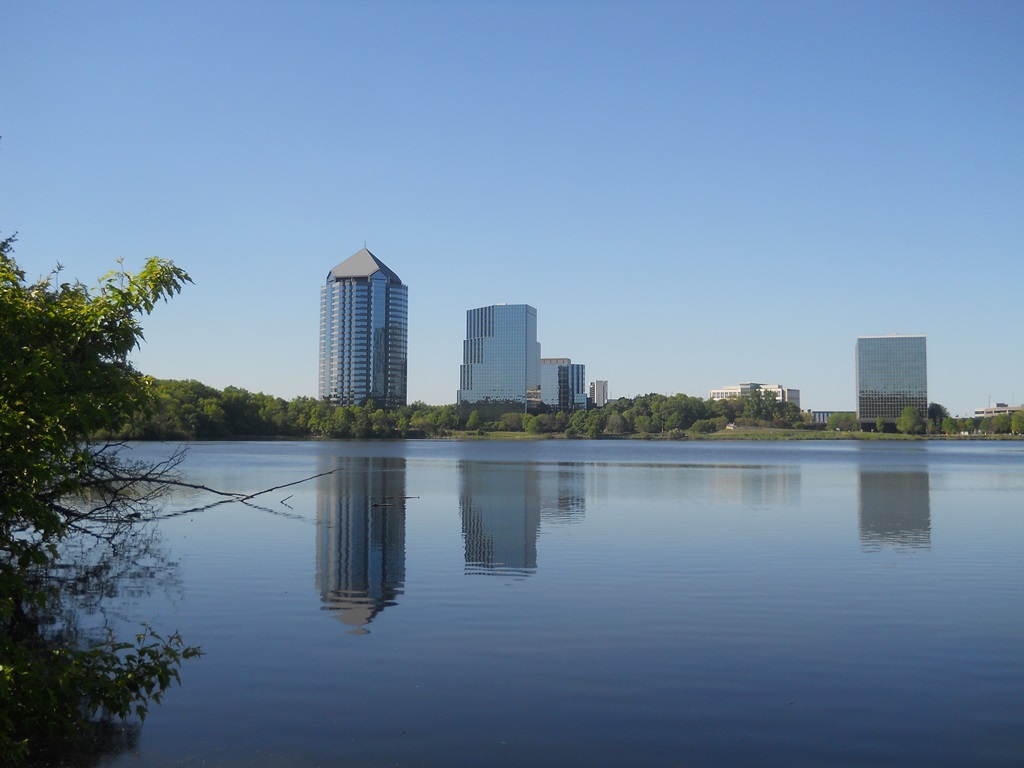
On June 1st, I ran the FANS 24-Hour Race in Bloomington, MN.  The race had a new venue this year.  Since 2014, the race has been at Fort Snelling State Park in the Minnesota River valley.  This year, severe flooding in the river valley forced the park to close, and it wasn’t expected to re-open until July.  Finding a new site for the race was difficult, because the Minneapolis parks won’t issue permits for a 24-hour event.  Five weeks before the race, the organizers announced that the race would be held at Normandale Lake in Bloomington.


I made a late decision to do the race this year, not signing up until May.  I haven’t been training for ultramarathons, but my marathon training has been progressing well.  I initially assumed I would do the 6-hour race.  When you’re in good shape to run marathons, it isn’t much of a stretch to run for six hours.  You just have to slow down and take a few walking breaks.

I’ve done FANS several times, both as a runner and as a walker.  In 11 previous attempts, I had logged more than 900 miles.  I’m already in their 500 mile club, and I was within striking distance of joining the 1,000 mile club.

My primary motivation for running FANS was to get closer to 1,000 miles.  At first, I thought I could do thirty-some miles, if I did the 6-hour race.  Then it occurred to me that I might be able to get to 1,000 miles this year, if I did the 12-hour race.

After looking up my previous totals, I realized I needed 66.5 miles to get to 1,000.  There have been years when I could do that in 12 hours, but I’m not currently in shape for that.  I just haven’t been putting in enough miles.  I could probably run 66.5 miles, but it would take me 13 or 14 hours.

Then it occurred to me I could enter the 24-hour race, but only run long enough to get to 66.5 miles.  In a fixed-time race, you can stop any time you want.  Ideally, I could finish 66.5 miles in time to get some sleep.  I didn’t want to run all night.

Our course was a 1.82 mile asphalt path around Normandale Lake.  Other than two short wooden bridges, it was all paved.


Most of the course was fairly flat, but there were a few sections with rolling hills.


The main aid station was next to the bandshell, where there was also a building with bathrooms.


There was also a smaller aid station on the opposite side of the lake, near Nine Mile Creek.


There was a small area on the west side of the lake where we could set up tents.  There wasn’t as much space for tents at this park as there is at Snelling Lake, so we were requested to keep our campsites as small as possible.  In the past, I’ve always had a tent, but my tent has a rather large footprint, so this year I decided to forego it.  I was comfortable doing that, only because I was reasonably confident it wouldn’t rain.


The race started Saturday morning at 8:00.  I’m used to arriving two hours early to set up the tent and unload my gear.  This year, I didn’t arrive until 6:45.  That gave me plenty of time to walk to the main aid station to check in.  Everyone has to get weighed before the race starts.

It was 60 degrees at the start, with an afternoon high in the mid 70s.  That would be hot for a marathon, but for 24-hour race, it’s not bad.  When you’re pacing yourself to run all day, you run at a slower pace and take walking breaks.  That makes it much easier for your body to dissipate excess heat.  I was relieved that we didn’t have any rain in the forecast.  It’s been a wet spring, so most of the lakes and rivers have had flooding.  Earlier in the week, the paths we were running on were flooded in a few spots, because of heavy rain on Memorial Day.  Thankfully, we had enough warm dry days for the water level to recede.

Our first lap was a slightly shortened lap of 1.68 miles.  All subsequent laps were 1.82 miles.  To run at least 66.5 miles, I needed to complete 37 laps.  To keep the mental arithmetic easy, I gave myself 20 minutes per lap.  At that pace, I would reach my goal in 12 hours and 20 minutes, which would have me finishing before it got dark.  I didn’t know if that pace would be sustainable, but it seemed reasonable to start at that pace, and make adjustments as necessary.

I kept myself on a consistent pace using variable-length walking breaks.  After running one lap, I walked until my watch read 20 minutes.  Then I resumed running until the end of the second lap and walked until my watch read 40 minutes.  I always started my walking breaks at the end of a lap, and always ended them on a multiple of 20 minutes.  The beauty of this strategy is that is automatically adjusts for things like bathroom breaks.

There was a cold breeze, so I started the race wearing a light jacket.  After a couple laps to get warmed up, I was able to take it off.  I drank a small cup of water or Gatorade at each aid station.  Every couple of laps, I also had a small amount of solid food.  At various times, I ate pretzels, candy, PBJs, and naan bread.  The naan was warm and buttery.  It was a nice change of pace from the usual aid station food.

During the morning hours, my pace felt really easy.  That’s how it should feel when you’re running all day.  My walking breaks were typically about six minutes.  Then I’d run the rest of the lap.

Every four hours, we had to weigh in, so the medical staff could tell if we were hydrating properly.  At noon, my weight was up a pound, suggesting that I was drinking too much.  For the next four laps, I only drank at the main aid station.  After that, I went back to drinking at both of them.

There were signs at various places indicating where we would reach significant milestones.  During my 15th lap, I reached the marathon mark.  When I finished that lap, I was officially a finisher of at least a marathon, making this my 50th marathon or ultra in Minnesota.  As I started my next lap, I looked at it from a different perspective.  I was now running farther than I’ve run since August.  For the rest of the race, I was running distances for which I haven’t trained.

To stay motivated, I needed to focus on intermediate goals.  The next goal was to reach the 50K mark, which came during my 18th lap.  After 19 laps, I was more than halfway to my goal.  I just needed to run 18 more laps, but they were getting tougher.

In the afternoon hours, it got warmer, and the sun came out.  Running in the warmer temperatures was more tiring.  I was still doing 20 minute laps, but it didn’t feel as easy as before.  I wasn’t sure if I could sustain it for the whole race.  Eventually, as my running became less efficient, I couldn’t afford to do as much walking.  Soon, my walking breaks were only four minutes.

After eight hours, I weighed in again.  My weight was down a pound compared to my previous weigh-in.  I was sweating more in the afternoon sun.

The time it took to weigh in left me less time for my walking break.  I could only walk for two minutes.  On the next lap, I also only had a two minute break.  I finally had to abandon my pacing strategy.  I couldn’t sustain 20 minute laps for four more hours.  After that, I walked the first quarter mile of each lap and ran the rest of the way.  That gave me about four minutes of walking per lap.  That was difficult, but I was able to sustain it.

My pace slowed to about 23 minutes per lap.  If I could keep that up, I’d reach my goal by around 9:00 PM.  I could still finish before it got dark, but just barely.

The Gatorade was clear, so it looked just like water.  I had to pay attention to where it was on the table to know which was which.  On one lap, I saw some cups where the clear Gatorade was usually placed, but the liquid was bright yellow.  Did they switch to yellow Gatorade?  As I drank a cup, I quickly realized it was pickle juice.  It didn’t taste good, but it probably gave me plenty of salt.

In my 28th lap, I reached the 50 mile mark.  When I finished that lap, the lap counters rang a cowbell.  They do that whenever someone reaches a big milestone.

Now I just had nine laps to go.  Whether you’re counting down remain laps or remaining miles, it usually seems easier when you’re down to single digits.  This time, it didn’t.  With each lap, I had fewer to go, but each lap seemed more difficult than the previous one.  I was struggling.  I wasn’t trained to run this far, and it was really starting to show.

I had to get creative and think of intermediate goals.  In my 30th lap, I reached a distance equal to the length of the Comrades Marathon.  I got there in 9:58.  The cut-off time for Comrades is 12 hours, so I was well within that.  It’s worth noting, however, that this race didn’t have all the big hills that Comrades has.

My next goal was to finish 32 laps, which gave me 58.1 miles.  That that point, I had run my age in miles.

I started seeing some hot food at the main aid station.  On one lap, I ate some spaghetti.  On the next lap, I had a small slice of pizza.

I was starting to feel thirsty all the time, so I suspected I was getting dehydrated.  At the next weigh-in, my weight was actually up.  That surprised me, but at least I didn’t have to worry about drinking enough.

The next big milestone came early in my 35th lap, when I reached the 100K mark.  When I eventually finished that lap, I got my second cowbell of the race.  Now I just had two laps to go.

They had a leaderboard that showed the top men and women in each race.  At 8:30 PM, I was in 4th place in the 24-hour race, but that was misleading.  I was pacing myself to do 67 miles as fast as I could and then stop.  Others were pacing themselves to keep running all night.


As usual, there were a few walkers who were attempting to walk 100 miles to earn a Centurion Walker badge.  In my second-to-last lap, I did some extra walking, so I could briefly walk with two of the Centurion candidates.

John Greene and I often crew for each other.  John was doing the 24-hour walk, but like me, he didn’t have an ambitious goal.  John is also working on getting into the FANS 1,000 Mile Club.  He couldn’t get there this year, but if he walked enough miles this year, he could get there next year.  John was walking about four laps at a time and then taking breaks.  In my last lap, I walked the whole thing, so I could walk with John.  It was slower than my other laps, but I knew I had enough time to finish before it got dark.

Near the end of the lap, I took off running to ensure I would finish within 13 hours.  That lap gave me 67.2 miles, giving me more than 1,000 lifetime miles at FANS.  For that, I got to hear the cowbell for the third time.  Unofficially, I finished in 12:59:25.  Officially, my time for the race would be 24 hours.

After having another slice of pizza, I went home, so I could shower and try to get some sleep.  The shower was interesting.  As my sweat evaporated, it left a layer of salt.  As I started to rinse that off, my skin initially felt slippery.  It took a few minutes to thoroughly rinse away the salt water.  When I rinsed my face, I could taste salt water getting into my mouth.

When I got into bed, I felt a bit nauseous from all the food and beverage in my stomach.  Sitting or standing, I felt fine, but it didn’t feel good to lie down.  That feeling eventually passed, but I couldn’t get to sleep.  It was as if I had been drinking coffee all day.  I had a few small glasses of coke during the race, but this was something else.  After exerting myself so hard for so many hours, my body chemistry was off.  Who knows what kind of stress hormones I was producing.

I took me until 4:00 AM to get to sleep.  Then my alarm woke me up at 5:00.  I wanted to go back to watch the end of the race.  I was moving kind of slow, so it took me a long time to get ready.  I finally got back to Normandale Lake around 6:45.

When I got there, John was still on the course.  He had just finished his 37th lap.  He did one more to make sure he beat my total.  We can be competitive at times.

After the race, there was a breakfast and awards ceremony under the bandshell.  First they have awards to the top finishers in each race.  Then they give special shirts to anyone who finished 100K in the 12-hour race or 100 miles in the 24-hour race.  After that, they honor anyone who reached a lifetime milestone.  I got a jacket as a new member of the 1,000 mile club.


Race Statistics
Distance:  67.2 miles
Official Time:  24:00:00
Actual Time on Course:  12:59:25
Average Pace:  11:36
Lifetime Marathons/Ultras:  374
Minnesota Marathons/Ultras:  50

Tuesday, May 21, 2019

Call for Donations to FANS Scholarship Fund


In 11 days, I’ll be running in the FANS 24-Hour race.  You may recall I also did this race last year.  I’ve done it a total of 11 times, if you include the 6-hour and 12-hour races.

Last year, FANS was my “A” race for the year.  I registered for the walking division, and I spent nearly a year training for it.  My goal was to walk 100 miles in 24-hours.  I did it, but it was probably the most difficult thing I’ve ever done.  This year, my goal is much softer.  I haven’t really trained for a 24-hour race, but I need just 66.5 miles to join the FANS “1,000 Mile Club.”  I’m registered for the 24-hour race, but my plan is to run long enough to get to 66.5 miles.  Then I’ll stop.  If all goes well, it’ll take me 13 or 14 hours.

The race is a fundraiser for the FANS project, which works with middle school and high school students in Minneapolis.  Their mission is to give these students a better chance of success by teaching them important life skills and encouraging them to stay in school.  Here’s a link to a page that explains more about the FANS project:


I’ve been doing the FANS races off and on since 1998.  When I’m not running, I’m usually crewing or volunteering.  I always make a donation to FANS, and I encourage my friends to do the same.

As a participant in the race, I had a choice of paying an entry fee or raising at least $250 in donations.  I opted to raise money, but I want to make it clear, that I’m not asking anyone to make a donation just so I can run a race.  I’ve already made a donation that covers my fundraising commitment.  I’m asking my friends to make donations, because I believe FANS is a good cause.

The costs associated with putting on the race are covered by the event’s sponsors.  One hundred percent of your donation will go toward college scholarships for students graduating from the FANS program.  Donations are tax-deductible.

Here’s a link to my FANS fundraising page.  You can pledge a certain amount for each mile I run, or you can donate a fixed amount.  For what it’s worth, my stated goal is 67 miles.


Please consider making a donation to the FANS scholarship fund.  Thank you.

One other note:  The websites above might say that the races are being held at Snelling Lake in Fort Snelling State Park.  That's the usual location, but flooding in the Minnesota River valley has forced a last-minute change of venue to Normandale Lake in Bloomington.

Sunday, May 19, 2019

Race Report: 2019 Fargo Marathon


On May 18, I ran the Fargo Marathon.  I didn’t sign up for this race until April.  Deb and I were originally planning to go to Colorado that weekend, but our plans changed.  I wasn’t sure if I’d be able to find a hotel room in Fargo on such short notice, but I was pleasantly surprised to find several hotels that still had rooms.  I was also surprised to find room rates that seemed normal.  The last time I did this race, the hotels all seemed to be twice as expensive on the weekend of the marathon.

I stayed at Home2Suites.  I’m familiar with most of the Hilton brands, but I had never stayed at a Home2Suites before.  The room had a living room/kitchenette that was separate from the bedroom.  Each room had its own thermostat, so I could keep the bedroom cold for sleeping while keeping the living room warmer.

I drove to Fargo on Friday, making a lunch stop in Fergus Falls.  After checking into my room at Home2Suites, I went to the expo at the FargoDome.  I picked up my race packet and stopped by the booth for the 50 States Marathon Club.  Then I returned to the hotel, so I could drop off my race packet.  I’m always afraid I’ll misplace it if I keep it with me all day.  The race shirt was a hooded sweatshirt.  That was a nice change of pace.  I have hundreds of race shirts, so I always like it when I get something different.

This race was one of the quarterly reunions of the 50 States Marathon Club.  I went back to the FargoDome to attend the club meeting.  A big part of the meeting is recognizing members who have recently finished running marathons in all 50 states.  There’s also a chance for everyone to introduce themselves and tell their stories.  I saw quite a few old friends at the meeting.

I had dinner at Old Chicago.  I couldn’t think of any local pizzerias that I haven’t already tried, so I went with a familiar chain.  After dinner, I sampled some local beers at the Fargo Brewing Ale House, which happened to be next door to Home2Suites.

I got to bed early and slept well for about six hours.  Then I woke up and couldn’t get back to sleep.  I felt OK, so I didn’t worry too much about not getting more sleep.

Home2Suites has a free breakfast, but it doesn’t start until 6:00 AM.  I wanted to leave before that, so I made a cup of tea and reheated a slice of pizza that was left over from my dinner in Fergus Falls.

The race started and finished at the FargoDome.  It didn’t start until 7:00 AM, but I wanted to get there early to make sure I didn’t have any trouble finding parking.  They opened the dome to runners at 6:00, so that’s when I got there.

At this time of year, weather in Fargo can be just about anything.  The first time I ran this race, temperatures were hovering near 32 degrees, with rain/snow mix.  I’ve also seen heat and humidity, with the threat of a thunderstorm.  This year, the temperature was in the 40s, but it rained all night.  From the hourly forecast, it was unclear how long the rain would continue.  It might rain for the whole race, but it also might stop raining as soon as the race started.

Five weeks ago, at the Carmel Marathon, I ran in a plastic rain poncho and got too hot as soon as the rain stopped.  Wanting to avoid a similar experience, I opted not to wear a rain poncho.  Instead, I wore a Tyvek jacket.  It’s not really waterproof, but it would keep me warm enough if it only rained briefly.  If the rain stopped, I could take it off and tie it around my waist.  I underestimated how long the rain would last.  I also underestimated the wind.

One of the nice things about this race is the start and finish inside the FargoDome.  We might be cold and wet when we started running, but we were warm and dry while we waited for the race to start.  We could also count on being warm and dry after finishing.  This is the reason I was willing to risk being underdressed.  It’s also the reason I didn’t mind arriving early.

Thirty minutes before the race, there was a brief wedding ceremony for two of the runners, Ed and Bonnie.  I know Ed.  I’ve seen him at numerous races, and by chance, it was at the Fargo Marathon that I originally met him.

I ran my previous race in 3:26:59.  That was a big breakthrough for me.  The most obvious goal for this race was to see if I could do better.  I saw a 3:25 pace group, so I lined up right behind them.  I knew 3:25 was an ambitious goal, but I couldn’t resist testing the waters.  I didn’t feel like I had anything to lose by trying.

In some races, it takes half a mile to get up to pace.  We were lined up pretty close to the front, so we were going fast almost immediately.  The pace felt too fast, so I allowed myself to hang back a bit until I got used to the fast pace.  As we left the dome, I felt the rain.  Then we turned into the wind, and I realized it was stronger and colder than I anticipated.  After a few quick turns, I settled in behind the 3:25 pace group.  The pace felt like it might be too fast, but having a big group of runners in front of me helped shelter me from the cold wind.

To finish in 3:25, we needed to average 7:49 per mile.  The pace leader hit the one mile mark right on schedule, but I was a little bit behind the group, so I got there in 7:51.  By the end of the second mile, I found myself falling behind.  To stay with the group, I needed to maintain an effort that I could already tell was unsustainable.  I let the group go, but still tried to keep up with some of the runners around me.

Now that I was on my own, I was more exposed to the wind.  I also needed to pay attention to my mile times.  At three miles, I checked my watch.  I was only a few seconds off the pace for 3:25.  The pace group was a block ahead of me.  They were going too fast.  I had no regrets about letting them go.

Over the next several miles, I stopped trying to keep up with the runners around me.  I gradually unhitched myself from the pack and allowed myself to slow down.  I ran one mile in 7:55.  Then I ran the next two in 8:10.  Then I ran two more in 8:20.  I was trying to find my comfort zone, but I never found it.  By now, it was apparent that I not only wouldn’t beat my time from three weeks ago, but also wouldn’t run a Boston qualifying time.  I really wanted to see if I could qualify in two consecutive races, but I wasn’t willing to fight hard enough to keep up a fast enough pace.

This race has a flat course, but it has lots of turns.  On average, you turn every two or three blocks.  The rain kept up, and deep puddles formed at the sides of the streets.  To run the shortest distance, you had to take the shortest route through each turn.  To avoid the puddles, you had to stay near the center of the street.  You couldn’t do both.  I opted to avoid the puddles.

Sometimes, after a few turns, we would double back on a street we had run before.  These out-and-back sections gave me a chance to see some of my friends, as we ran in opposite directions.

After about an hour of running, it was apparent that the rain wasn’t to stop anytime soon.  It was even more apparent that the wind was much stronger than I anticipated.  I severely regretted not wearing a rain poncho.  By now, my clothes were wet and the wind was cutting through me like a knife.  My Tyvek jacket became less and less useful as the water soaked through it.

Between the wind, my wet clothes, and my soggy shoes, I felt miserable.  That’s one reason why I couldn’t get comfortable, even as I slowed my pace.  I also had an unsettled stomach.

The race organizers have two alternative routes for this race.  The traditional route crosses the Red River into Moorhead, MN and returns about mile miles later.  They also have a backup route in case flooding makes the traditional route untenable.  This year, there was severe flooding in the river valley, so I assumed they would have to use the “flood-proof” route.  The river level has receded significantly.  About a week before the race, the race committee decided they could use the traditional route.  About 10 miles into the race, we got right alongside the river.

Right around the 10 mile mark, I was passed by the 3:30 pace group.  By now, I knew I wouldn’t be breaking 3:35, much less 3:30.  It was inevitable they would pass me sooner or later.

Just before 11 miles, we crossed the river into Moorhead.  As I looked down at the river, the river level looked normal.  You’d never know how high it was a month ago.

On the Moorhead side, the route zigzagged south and east for the next two miles.  Then I reached a turnaround and started to come back.  I could tolerate the cold wet conditions when the wind was at my back, but coming back from the turnaround, I had to run into it.  The wind was strong enough to be tiring, but more importantly, it made me intolerably cold.

At 14 miles, I reached an aid station just as a strong wind gust blew all the paper cups across the road.  Then I had to turn into that wind for about a mile.

At the easternmost point in our route, we ran through two college campuses in Moorhead.  Running through Concordia College, I saw a medical aid station with a large red and white sign that read, “Medical Drop Out.”  If I was in distress, this would be a good place to seek medical attention.  At this point, I was pretty sure I could finish, but I wasn’t out of the woods.  My hands and forearms were numb, and I was painfully cold.  In my life, I’ve dropped out of five races.  Two of them were because of hypothermia, and it was a contributing factor in a third.  I had 11 miles to go, and the wind was getting stronger.

Running through Concordia College, we ran around a bell tower as the bells were ringing.  They’re loud when you’re right below them.  It was a welcome distraction.

Next, we ran through the Moorhead campus of Minnesota State University.  After a big loop, we headed back toward the river.  At times, it seemed like the rain might be stopping.  Then I saw it was still raining.  At this point, it was academic. My clothes were already soaked, and they wouldn’t dry out before the end of the race, even if the rain stopped.  All that mattered now was the wind, and it wasn’t letting up.

Running with the wind at my back, I sometimes started to feel more comfortable.  With the wind at my side, I got cold.  When I had to run into it, it was unbearable.

After returning to Fargo, we worked our way through some residential neighborhoods on the south and west sides of Fargo.  I was in survival mode now.  I just tried to get through each mile.  I never bothered to look at my watch.  My pace no longer mattered.  I was struggling to keep moving, but it had nothing to do with my pace or my fitness level.  It was all about how my body responds to getting cold.

They say there’s no such thing as bad weather – only bad clothing choices.  I made bad clothing choices.  I brought a rain poncho with me to the FargoDome, but left it in my gear bag.  I didn’t think I’d need it.  I thought it would be too hot.  I was wrong!

I had no idea what my pace was, but I knew there was a 3:45 pace group, and they were still behind me.  I was pretty sure I would break four hours, and that was still a goal worth fighting for.  I came into this race with a streak of seven consecutive sub4 finishes, and I wanted to keep that going.  Other than finishing and getting out of the cold, that was my only remaining goal.

They had a lot of music along the route.  Some of it was recorded music, but there were a surprising number of live bands.  They set up under canopies, but it was still impressive to see so many of them on such an awful day.  Sometimes hearing a particular song at a particular time can resonate with you.  Earlier in the race, “Riders on the Storm” was a painful reminder of the weather we were running in.  In the late miles, “I Will Survive” became my anthem.

When I eventually reached the 21 mile mark, I started counting down the individual city blocks.  I assumed there were about 10 per mile, so I began counting down from 52.  Believe it or not, that helped.

I kept my jacket unzipped in front, so it wouldn’t block my race bib.  When I was running into the wind, it sometimes pushed my jacket back over my shoulders.  Then my jacket started to catch the wind like a sail.  As I went through an aid station at 22 miles, I slowed to a walk, so I could zip the bottom of my jacket.  I couldn’t get the zipper started.  I came to a stop.  I still couldn’t get the zipper started.  My fingers wouldn’t work.  I tried to pull the zipper with my teeth, but I couldn’t hold onto the jacket. After wasting about a minute, I gave up.  As I resumed running, my neck started to hurt.  I think it’s because I was bending my head forward to look down as I was working on the zipper.

With about three and a half miles to go, as I was running through the downtown area, I had to go into the wind for about five blocks.  I didn’t know if I would make it.  Eventually, I turned out of the wind, and it got more tolerable.

I got through the last three miles by continuing to count down the remaining blocks.  With half a mile left in the race, I could see the FargoDome.  I knew the rest of the route.  We had to go halfway around the building to get back to the entrance we had left earlier in the morning.

As I entered the dome, I felt a blast of warm air.  Inside the dome, it was about 25 degrees warmer, and I was finally out of the wind and rain.  I ran past spectators who were sitting in the stands, sheltered from the cold rain and wind.


Each runner was announced as they approached.  From anywhere on the floor of the dome, you could look up at the scoreboard screen and see images of runners who were finishing.


I finished in 3:42:37.  I kept my sub4 streak alive.  I ran positive splits by seven minutes.  I’m surprised it wasn’t more.

I’m not sure how to describe the finisher medal.  I guess a picture is worth a thousand words.


Post-race food included pizza, donut holes, cookies, chocolate milk, and chocolate chip cookie dough.  I took the time to refuel.  Then I retrieved my gear bag, so I could put on my wind pants.  They were the only dry clothes I had, although I had to pull them on over damp tights.  I took off my wet gloves and jacket.  Now that I has indoors, they were doing more harm than good.

Most of my fingers were white from lack of blood flow.  Where my hands weren’t white, they were a pale purple.  They also seemed a bit puffy.  My body doesn’t respond well to cold.

After talking to a few other runners in the finish area, I eventually walked back to the car.  I ran the engine long enough to get the heat going, so I could warm up my hands.  Fargo isn’t that big, so it didn’t take long to drive back to the hotel.  Walking the short distance from the car to the hotel, I could barely tolerate the wind.  It was no longer raining, but the wind kept getting stronger.

I spent half the afternoon warming up in the hotel’s hot tub.  I probably only needed 15 minutes, but I met several other runners there.  Some were from cities where I’ve run marathons.  Some have done races that I’ve also done.  One is a close friend of two runners I know.  That’s one of the reasons I travel to races.  I always see people I know, and I always make new friends.

After changing into dry clothes, I walked over to the Ale House.  When I was there on Friday, I learned that if I came back wearing my finisher medal, I could get a free beer.  I also had an early dinner of pizza and bread pudding.

In the evening, I bumped into some of the same runners I met earlier in the hot tub.  We spent an hour or two in the hotel lobby trading stories about our travel experiences.  Outside, we could see rain coming down in sheets.  It just wasn't a pleasant day to be outside.


Race Statistics
Distance:  26.2 miles
Time:  3:42:37
Average Pace:  8:30    
Lifetime Marathons/Ultras:  373
Consecutive sub4 marathons:  8